 Save
Save There's something about the smell of sautéed soffritto—that holy trinity of onion, carrot, and celery—that instantly transports me to my grandmother's kitchen on a rainy afternoon. She'd always say minestrone was the soup that changed with the seasons, that you could make it a hundred different ways and it would always taste like home. I've spent years tinkering with her version, swapping vegetables based on what's at the market, and every single time it feels like a small act of magic watching a humble pot of broth transform into something so deeply satisfying.
I'll never forget the winter I made this for my neighbors during a snowstorm when the power went out in their house. We gathered around my kitchen table, bowls steaming, and somehow that simple soup became the highlight of their week. They still text me asking for the recipe, and I love that a dish this humble can pull people together like that.
Ingredients
- Olive oil: Use a good quality oil here since it's one of the first flavors you'll taste when the vegetables hit the pan.
- Onion, carrots, celery: This is your flavor foundation, the holy trinity that Italians refuse to skip, and for good reason.
- Garlic: Minced fine so it distributes evenly and doesn't overpower with big chunks.
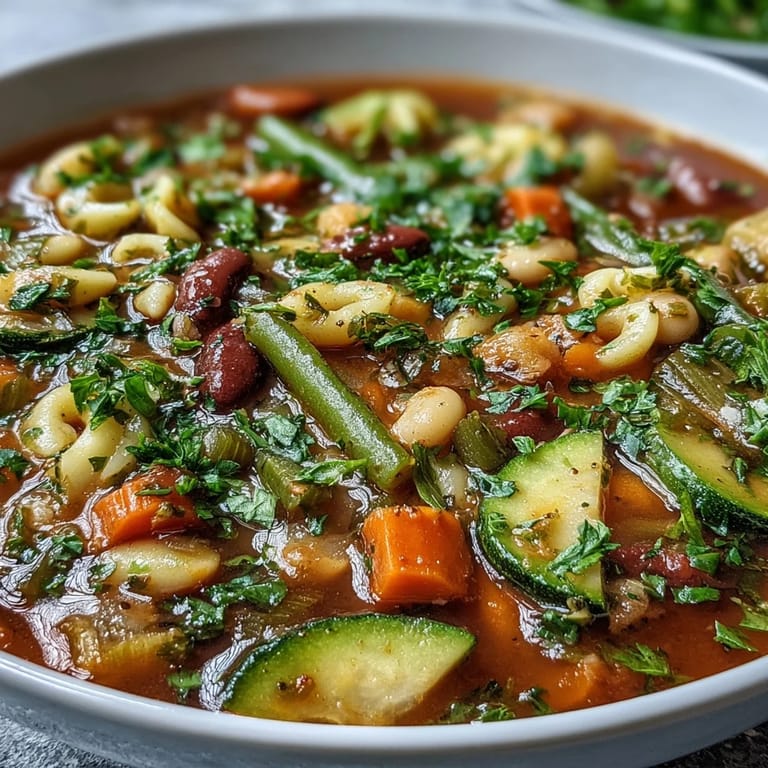
- Zucchini or butternut squash: Summer or winter, this is where you pivot the soup's personality based on the season.
- Green beans, kale, or spinach: Fresh greens add brightness and nutrition, switch them based on what looks best at your market.
- Diced tomatoes: Canned is perfectly fine here and often more flavorful than fresh tomatoes out of season.
- Potato: Optional but it adds a subtle sweetness and heartiness that makes the soup feel more substantial.
- Vegetable broth: This is the backbone, so use something you'd actually drink on its own, not the sad, salty stuff in the back of the pantry.
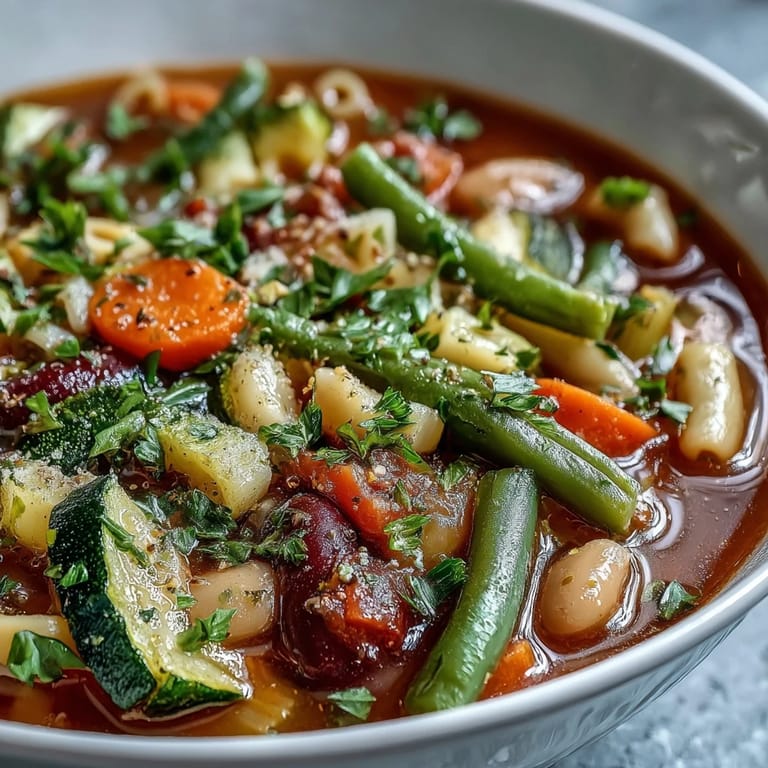
- Cannellini or borlotti beans: They break down slightly and create a natural creaminess that's the secret weapon here.
- Small pasta: Ditalini, elbow, or shells work best because they actually fit on a spoon and don't get lost in the broth.
- Bay leaf, oregano, basil: Dried herbs are your friend in soups because the long simmer time lets them fully infuse the broth.
- Fresh parsley: Always add this at the end so it stays bright and alive rather than getting cooked into submission.
- Parmesan cheese: A shaving on top adds a savory depth, though the soup is equally lovely without it.
Tired of Takeout? 🥡
Get 10 meals you can make faster than delivery arrives. Seriously.
One email. No spam. Unsubscribe anytime.
Instructions
- Build your flavor base:
- Heat the olive oil in a large pot and add your onion, carrots, and celery all at once, letting them sauté for about five minutes until they soften and start to smell absolutely incredible. You'll know they're ready when the onion becomes translucent and you can't resist taking a deep breath over the pot.
- Welcome the garlic and seasonal vegetables:
- Stir in your minced garlic, zucchini or squash, and whichever green you've chosen, cooking for just three minutes so the garlic stays fragrant and the vegetables don't lose their color. This is a quick step, but it matters.
- Add tomatoes and start the simmer:
- Pour in your diced tomatoes and potato if you're using one, let everything cook together for two minutes, then add your vegetable broth and that bay leaf. You're looking for the kitchen to smell like a proper Italian home right now.
- Let time do the work:
- Bring everything to a boil, then drop the heat down and let it simmer gently for fifteen minutes, which gives all the vegetables time to get tender and the flavors time to mingle. Don't rush this part; the longer it goes, the deeper the flavor gets.
- Finish with beans and pasta:
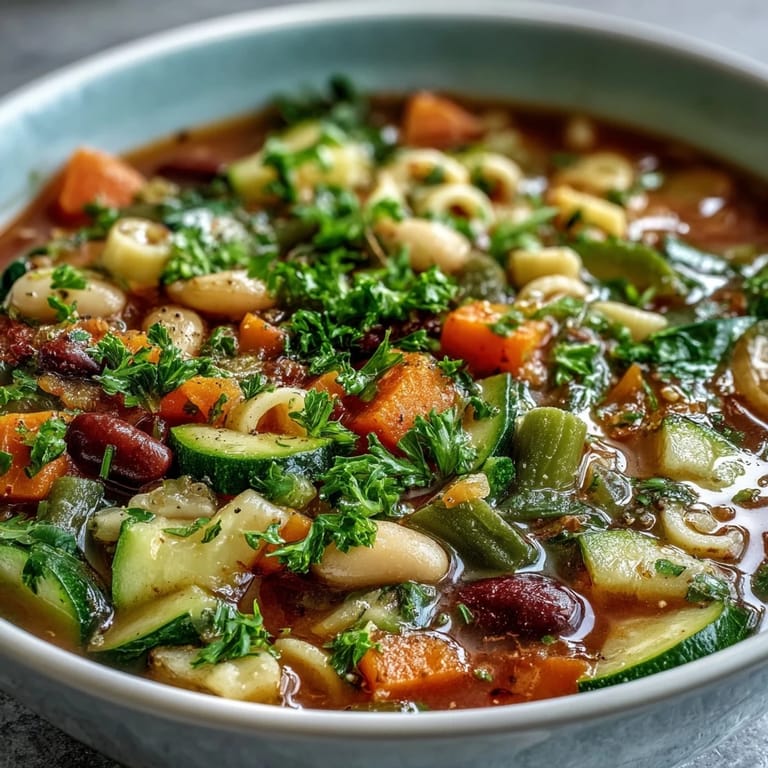
- Add your drained beans and pasta right into the pot and let it all simmer uncovered for ten to twelve minutes until the pasta is tender and the beans have started to break down slightly. Stir it occasionally so nothing sticks to the bottom.
- Season and brighten:
- Remove that bay leaf, season everything with your dried oregano, basil, salt, and pepper, then stir in your fresh parsley at the very end. Fresh herbs added at the finish taste completely different from herbs that have been simmering the whole time.
- Serve with love:
- Ladle the soup into bowls and top with Parmesan if you want, a drizzle of really good olive oil, and maybe some crusty bread on the side. This is the moment when all that work transforms into something people actually want to eat.
 Save
Save  Save
Save What I love most about minestrone is that it's never the same twice but it's always exactly what you need. It's the kind of dish that improves as it sits, so don't be shy about making a big pot and eating it all week.
Playing with the Seasons
The real magic of minestrone happens when you stop thinking of it as a fixed recipe and start seeing it as a canvas for whatever your farmers market is selling that week. Spring calls for tender peas, fresh leeks, and young greens, while summer begs for zucchini, green beans, and fresh basil. Autumn is when I start sneaking in butternut squash and cabbage, and winter is all about hearty kale, root vegetables, and that sweet, roasted flavor of winter squash. The technique stays exactly the same, but the soup tastes like a love letter to whatever season you're living in.
The Vegan Pivot
I made this for a vegan friend once and was shocked by how little I actually had to change. Honestly, skip the Parmesan on top and the soup doesn't miss it one bit because the beans and the pasta create plenty of richness on their own. If you're using vegetable broth that you trust, this becomes one of those rare recipes where the vegan version isn't a compromise, it's just a different expression of the same beautiful thing.
Make It Your Own
After years of making this, I've realized that minestrone is less about following rules and more about understanding the principles. The soffritto builds flavor, the beans create body, the pasta adds substance, and the broth ties it all together. Everything else is just your personal preference and what you have on hand. Some nights I add a splash of red wine, sometimes I throw in a can of white beans instead of cannellini, and once I even stirred in some pesto at the end because I had too much in the freezer.
- Keep your vegetable pieces roughly the same size so they cook at the same rate and look intentional in the bowl.
- Taste as you go and don't be afraid to season aggressively because broth dilutes everything.
- The day-old version tastes better than the fresh version, so make extra and look forward to tomorrow's lunch.
 Save
Save 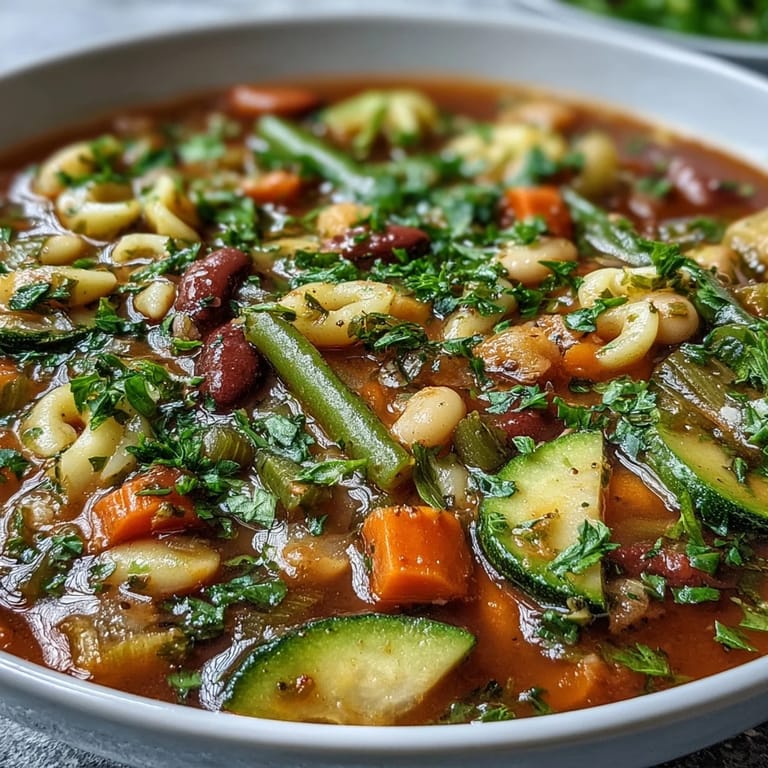 Save
Save This is the soup that teaches you how to cook with confidence instead of fear, how to listen to what your kitchen is telling you and adjust as you go. It's a gift that keeps giving, warm and patient every time you make it.
Recipe FAQs
- → Can I make this soup ahead of time?
Yes, minestrone tastes even better the next day as the flavors meld together. Store it in the refrigerator for up to 4 days. Note that the pasta will absorb liquid, so you may need to add extra broth when reheating.
- → What vegetables work best in winter versus summer?
Summer minestrone shines with zucchini, green beans, and fresh tomatoes. Winter versions benefit from heartier vegetables like butternut squash, kale, savoy cabbage, and root vegetables. Both versions are equally delicious.
- → Can I freeze vegetable minestrone?
You can freeze this soup for up to 3 months, but it's best to freeze it before adding the pasta. Cook the pasta separately and add it when reheating, as frozen pasta can become mushy.
- → How can I make this soup heartier?
Add more beans, increase the pasta quantity, or include diced potatoes. You can also add a Parmesan rind while simmering for deeper flavor, or stir in some pesto just before serving.
- → What type of pasta works best?
Small pasta shapes like ditalini, elbow macaroni, or small shells work perfectly. They're easy to eat with a spoon and cook evenly in the broth. For gluten-free options, use your favorite gluten-free small pasta.
- → Can I use dried beans instead of canned?
Absolutely. Use about 1 cup of dried cannellini or borlotti beans. Soak them overnight, then cook until tender before adding to the soup. This adds even more authentic flavor to your minestrone.