 Save
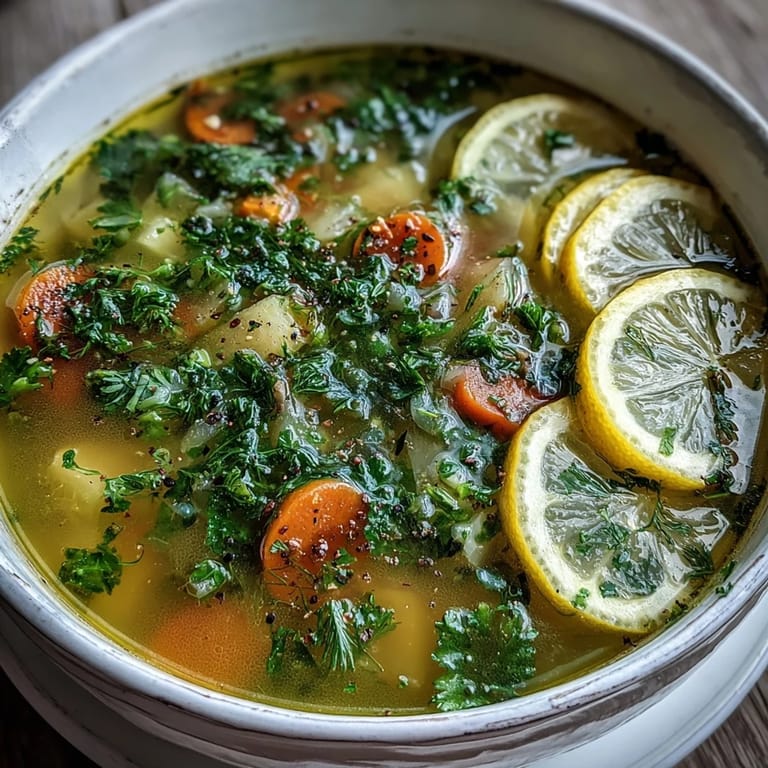
Save There's something about the smell of lemon zest hitting hot oil that makes a kitchen feel alive. I discovered this soup on a gray Tuesday afternoon when I was tired of heavy foods but craved something with actual flavor. My neighbor stopped by, caught a whiff of the simmering broth, and asked what smelled so good—by the time it was ready, we were sharing bowls at my kitchen table, and she was already asking for the recipe.
I made this soup for my mom during a visit when she was recovering from being under the weather. She's usually suspicious of anything with this much herbs, but she had three bowls and admitted it was exactly what her body needed. There's a quiet power in food that feels both comforting and energizing at the same time.
Ingredients
- Olive oil: Use good quality if you can—it's one of just a few ingredients, so it shows.
- Onion and garlic: These are your flavor foundation, so don't rush chopping them fine.
- Carrots and celery: They add natural sweetness and body; the diced size matters because you want them tender but still slightly toothy.
- Vegetable broth: Low sodium is genuinely important here because the lemon juice is bright enough on its own.
- Lemon zest and juice: Don't skip the zest—it holds concentrated flavor that juice alone can't deliver.
- Fresh herbs (parsley, dill, chives, thyme): This is where the magic lives; dried herbs will taste flat and one-note by comparison.
- Cooked rice or orzo: Optional but recommended if you want the soup to feel more substantial and less like just broth.
- Salt and black pepper: Always taste before serving because you might need less salt than you think if your broth isn't low sodium.
Tired of Takeout? 🥡
Get 10 meals you can make faster than delivery arrives. Seriously.
One email. No spam. Unsubscribe anytime.
Instructions
- Warm the oil and soften the onion:
- Heat olive oil in a large pot over medium heat, then add the chopped onion. You're looking for it to turn translucent and slightly golden, not browned—this takes about 3 minutes and you'll know it's ready when the raw smell disappears and something sweeter emerges.
- Build flavor with aromatics and vegetables:
- Add minced garlic, diced carrots, and diced celery. Stir everything together and let it cook for 5 minutes; the vegetables will begin softening and the kitchen will smell impossibly good.
- Create your broth base:
- Pour in the vegetable broth and bring it to a boil, then immediately lower the heat to a simmer. Let it bubble gently for 10 minutes so the vegetables fully soften and meld with the broth.
- Add the bright elements:
- Stir in the lemon zest, lemon juice, and all the fresh herbs. The soup will suddenly shift in flavor—less predictable and more alive. Simmer for another 5 minutes to let the herbs release their essence.
- Optional body and final seasoning:
- If using rice or orzo, add it now and let it heat through for 2-3 minutes. Taste the soup, then season with salt and pepper—go slowly and taste as you go because it's easier to add more than to fix over-salted broth.
 Save
Save What surprised me most about this soup is how it became the thing I made when someone needed comfort but didn't need heaviness. My daughter asked for it when she was stressed about exams, and my friend requested it after a difficult conversation. There's wisdom in simplicity.
The Magic of Lemon in Soup
Lemon does something unexpected in soup—it brightens without making things taste sour. The zest holds oils and aromatic compounds that juice alone can't deliver, and when you combine them, you get depth instead of just tang. I've learned to think of lemon less as an acidic ingredient and more as a flavor amplifier that makes everything else taste more like itself.
Customizing Without Losing Your Way
The beauty of this soup is that you can play with it. I've swapped dill for basil and it became Mediterranean instead of Scandinavian. I've added a handful of spinach at the end for color and extra greens. I've even stirred in some white beans to make it heartier for days when I needed more substance. The frame stays solid—onion, garlic, broth, lemon, herbs—but everything else is negotiable.
Serving and Storage Wisdom
Serve this soup hot but not scalding—it's delicate enough that you want to taste every note. It keeps beautifully in the refrigerator for three days and freezes well for up to a month, though the fresh herb flavor does fade slightly after freezing. I've found that reheating on the stovetop (not microwave) and adding a squeeze of fresh lemon juice before serving brings everything back to life.
- Pair it with crusty bread if you're making it a complete meal.
- A simple side salad with a light vinaigrette complements the soup without overwhelming it.
- If you freeze it, thaw overnight in the refrigerator rather than at room temperature.
 Save
Save This soup reminds me that sometimes the best recipes aren't complicated—they're just honest. It asks you to do simple things well and rewards you with something that tastes like it took much more effort than it actually did.
Recipe FAQs
- → Can I make this soup ahead of time?
Yes, this soup stores well in the refrigerator for up to 3 days. Add fresh herbs just before serving for the brightest flavor. The lemon flavor may mellow slightly over time, so you can add a fresh squeeze of lemon juice when reheating.
- → What can I substitute for fresh herbs?
While fresh herbs provide the best flavor, you can use dried herbs in a pinch. Use about one-third the amount of dried herbs compared to fresh. Add dried herbs earlier in the cooking process to allow their flavors to bloom.
- → How can I make this soup more filling?
Add cooked rice, orzo, or small pasta shapes for extra body. You can also include white beans, chickpeas, or shredded chicken. Adding a poached egg on top of each serving creates a luxurious, protein-rich meal.
- → Can I freeze lemon herb soup?
The soup can be frozen for up to 2 months, but it's best to freeze it before adding fresh herbs and lemon juice. Add these fresh ingredients after thawing and reheating for optimal flavor and color.
- → What vegetables can I add or substitute?
Zucchini, spinach, kale, or green beans work wonderfully in this soup. Add leafy greens during the last few minutes of cooking. Root vegetables like parsnips or turnips can replace carrots for a different flavor profile.
- → Why is my soup too sour?
If the lemon flavor is too strong, balance it by adding a small amount of honey or sugar. You can also dilute the soup with additional broth. Start with less lemon juice and adjust to taste, as lemon acidity can vary.