 Save
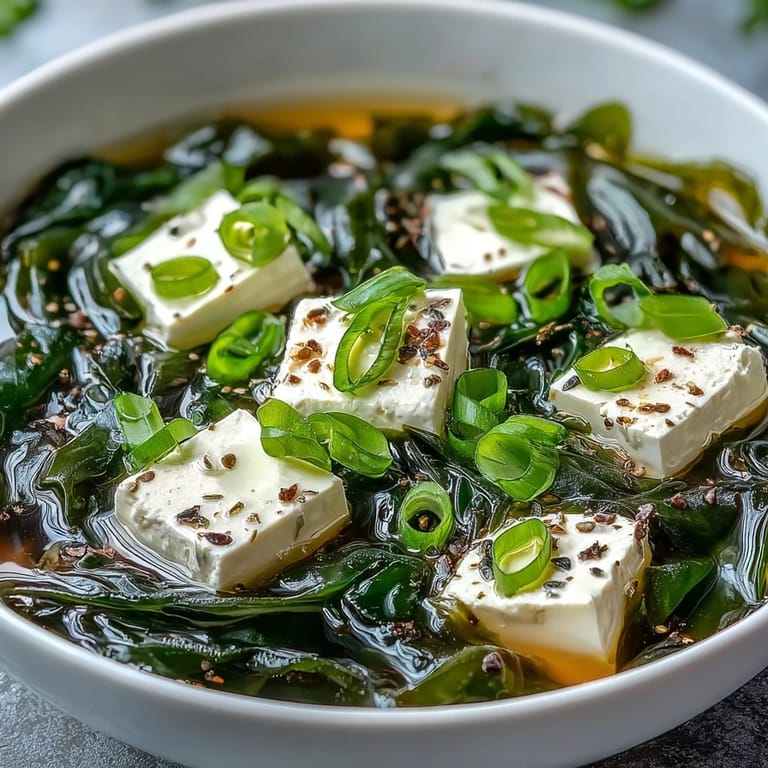
Save My grandmother used to make wakame soup on quiet mornings, the kind where steam rose from the bowl and somehow made everything feel manageable. Years later, I realized she wasn't just feeding us—she was teaching us that the simplest broths often hold the most nourishment. This particular version came together one evening when I wanted something warm but not heavy, something that tasted like care in under twenty minutes. The delicate flavor surprised me; how could something so minimal be so complete?
I made this for a friend who was going through a rough patch, and watching her shoulders relax after the first spoonful reminded me why Japanese comfort food exists. She asked for the recipe that night, and I've since made it for half a dozen people who all came back asking the same question. There's something about presenting someone with a bowl of clear broth and finding they needed exactly that.
Ingredients
- Dried wakame seaweed: Just eight grams transforms into tender ribbons that add earthiness and iodine your body actually craves—don't skip the soaking step or it'll stay tough.
- Dashi stock: This is your foundation, and vegetarian dashi works beautifully if you use kombu and shiitake instead of fish.
- Silken or firm tofu: Silken dissolves slightly and softens the broth, while firm keeps its shape; choose based on the texture you're drawn to.
- Scallions: These aren't just garnish—they add a whisper of sharpness that wakes up the whole bowl.
- White miso paste: Blend it with hot broth first, never boil it directly, or you'll lose its living cultures and delicate flavor.
- Soy sauce: A small amount anchors everything without overpowering the quiet elegance of the broth.
- Sesame oil: Optional, but a teaspoon adds a richness that makes you pause between sips.
Tired of Takeout? 🥡
Get 10 meals you can make faster than delivery arrives. Seriously.
One email. No spam. Unsubscribe anytime.
Instructions
- Rehydrate the wakame:
- Place the dried seaweed in a small bowl of cold water and let it sit for five minutes—you'll watch it unfurl and soften, becoming almost delicate. Drain it gently and set aside.
- Bring the broth to life:
- Pour your dashi into a medium saucepan and let it come to a gentle simmer over medium heat. You want barely-breaking bubbles, not an aggressive boil.
- Add tofu and wakame:
- Slide the cubed tofu and rehydrated wakame into the warm broth and let everything mingle for two to three minutes. The tofu will warm through and the wakame will continue its quiet transformation.
- Temper the miso:
- In a small bowl, take a ladle of the hot broth and stir it slowly into your miso paste until completely smooth—this prevents lumps and keeps the miso's beneficial enzymes intact. Pour this mixture back into the pot and stir gently.
- Season and finish:
- Add the soy sauce and sesame oil if you're using it, give everything one final gentle stir, and let it heat through for just one more minute without boiling. Taste it; it should taste clean and balanced, not sharp.
- Serve and garnish:
- Pour into bowls while it's still steaming and scatter the sliced scallions across the top where they'll soften slightly from the heat. Serve immediately.
 Save
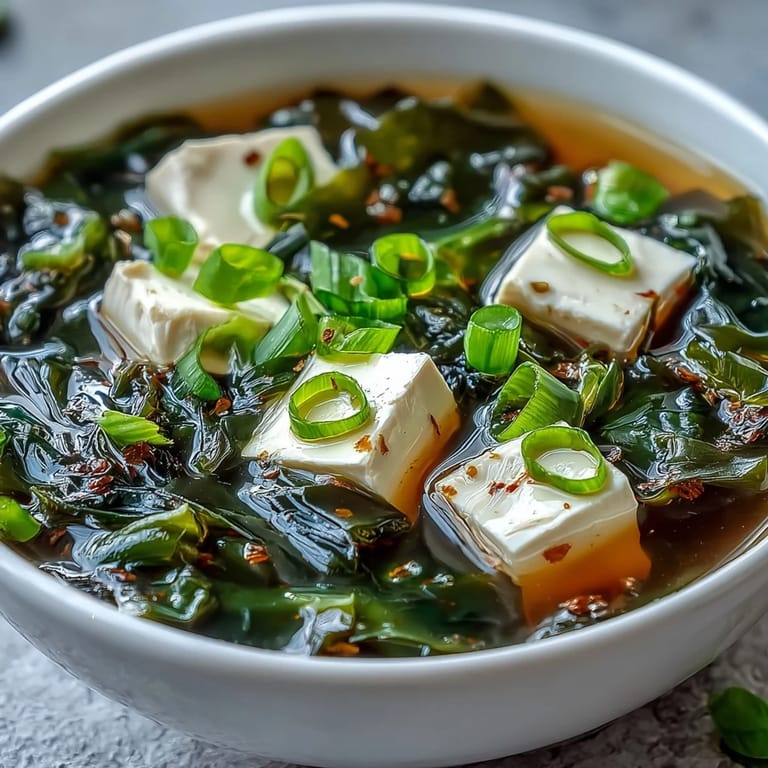
Save There's a moment during the winter when everyone around you seems tired, and you realize that what people actually need isn't elaborate meals but something that says, "I thought of you." This soup became my answer to that moment. It asks so little yet gives so much back.
The Quiet Power of Umami
Dashi broth contains natural glutamates that create umami, that fifth taste your tongue recognizes as deeply satisfying. The wakame adds to this effect, which is why the soup tastes full even though it's essentially three main ingredients in clear broth. Once you taste real umami, you stop thinking you need salt or spice to feel nourished.
Building Your Dashi at Home
Store-bought dashi is convenient, but if you've got kombu and dried shiitake mushrooms on hand, you can make vegetarian dashi in minutes. Soak kombu in cold water for five to ten minutes, bring it gently to a simmer (remove it before boiling), add dried shiitake, and let it infuse for another five minutes. The result tastes cleaner and lighter than anything pre-packaged, and you'll taste the difference immediately in this soup.
Variations That Keep It Fresh
Once you've made this basic version a few times, you'll start seeing how easily it adapts to what's in your refrigerator. The broth can hold mushrooms, thin carrot slices, or handfuls of spinach without losing its essential character. Some nights I add a soft egg halfway through cooking, letting the yolk meld into the broth and create creaminess where there was none.
- Mushrooms like shiitake or enoki add earthiness without competing with the wakame's subtle brine.
- A whisper of fresh ginger grated right before serving brightens everything without overwhelming the quiet flavors.
- Soft-boiled or poached eggs transform it from a side into something more substantial on hungrier evenings.
 Save
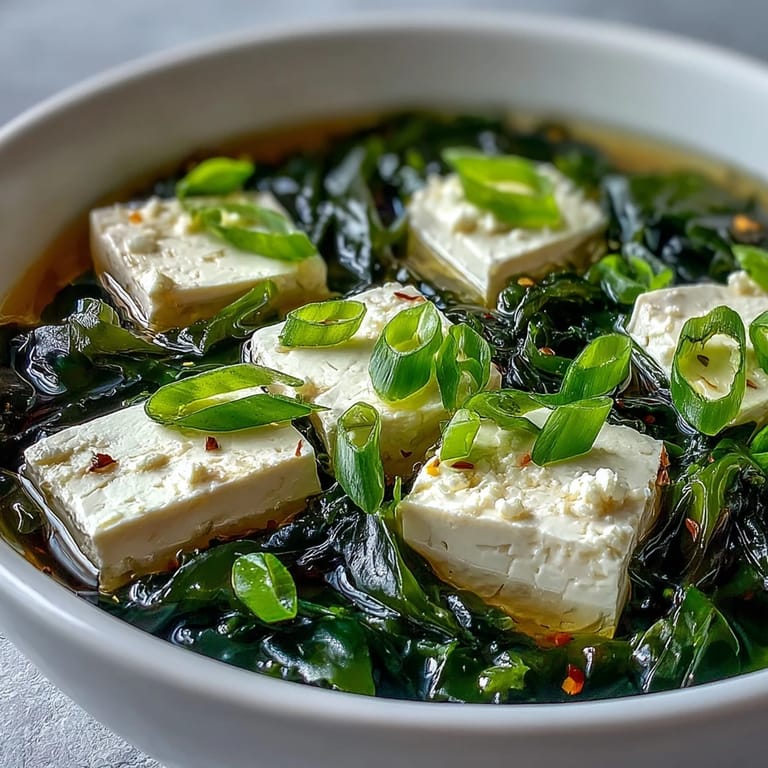
Save This soup asks so little of your time and ingredients, yet rewards you with something that tastes like centuries of kitchen wisdom in a single bowl. Make it when you need comfort, make it when someone else does, and it will become part of your quiet moments too.
Recipe FAQs
- → Can I use fresh wakame instead of dried?
Fresh wakame works beautifully—simply rinse thoroughly and chop into bite-sized pieces. Since it's already hydrated, skip the soaking step and add directly to the simmering broth. Reduce cooking time slightly as fresh seaweed requires less heat to become tender. Note that fresh wakame may have a milder flavor than its dried counterpart, so consider adjusting miso quantities to taste.
- → What's the purpose of dissolving miso separately?
Blending miso with hot broth before adding it back prevents clumping and ensures even distribution throughout the soup. This technique also protects the beneficial probiotics and enzymes in fermented miso from being destroyed by direct boiling. The result is a smoother, more cohesive broth with consistent flavor in every spoonful. Simply whisk a ladle of hot liquid into the miso paste until completely smooth, then stir this mixture into your simmering pot.
- → How do I store and reheat leftovers?
Store cooled soup in an airtight container in the refrigerator for up to 3 days. The tofu and wakame may absorb more broth over time, which creates an even richer flavor profile. To reheat, warm gently over low heat—avoid boiling to preserve miso's delicate qualities and prevent tofu from becoming tough. If the broth thickens significantly after storage, add a splash of water or dashi while reheating to reach desired consistency.
- → Can I make this without dashi stock?
While dashi provides authentic depth, you can substitute with high-quality vegetable broth or water enhanced with kombu (kelp) pieces. For a quick alternative, simmer a 4-inch piece of kombu in water for 15 minutes, then remove before adding other ingredients. Another option includes using chicken or mushroom broth for different flavor profiles. Keep in mind these substitutions will alter the traditional Japanese character but still yield delicious results.
- → What vegetables can I add for more variety?
Shiitake mushrooms bring earthy notes and meaty texture when sliced thinly—add them during the initial broth simmering. Spinach or bok choy wilts beautifully into the hot liquid, providing color and nutrients. For root vegetables, matchstick carrots or daikon radish add refreshing crunch. Snow peas, corn kernels, or thinly sliced zucchini also complement the briny wakame and creamy tofu. Add heartier vegetables earlier in the cooking process, while delicate greens go in during the final minute.
- → Is this suitable for meal prep?
Absolutely—this soup is an excellent meal prep candidate. The flavors actually develop and deepen after a day in the refrigerator. Prepare a large batch and portion into individual containers for convenient lunches or light dinners. When meal prepping, consider storing garnishes like scallions separately and adding them just before serving to maintain their crisp texture. If freezing, omit the sesame oil and add it fresh after reheating for the best flavor and texture.