 Save
Save My partner handed me a package of shirataki noodles one afternoon with the kind of skeptical look that said, "I found these at the store, but I have no idea what to do with them." That single moment sparked an obsession with this impossibly light bowl of broth and noodles that somehow feels more satisfying than it has any right to be. There's something almost meditative about watching those translucent strands soften in a steaming bowl of bone broth infused with ginger and garlic, each slurp becoming less about hunger and more about comfort. It became our go-to dinner on nights when we wanted something nourishing without the heaviness, and it's stayed there ever since.
I made this for my friend who'd just started a low-carb lifestyle, and I watched her face light up when she realized she could still have a proper noodle soup. She'd been convinced she was saying goodbye to comfort food forever, and that one bowl changed her entire approach to eating this way. Now she texts me photos of the versions she's making at home, each one a little different based on what's in her fridge. Food really does have this quiet power to shift how we see what's possible.
Ingredients
- Bone broth (4 cups): The foundation of everything—look for grass-fed beef or pastured chicken varieties without sneaky sugar hiding in the ingredient list. Homemade is incredible if you have it, but quality store-bought saves you hours and still delivers that deep, collagen-rich flavor.
- Fresh ginger (thumb-sized piece, sliced): Don't peel it; the skin holds so much of the warming spice that makes each sip feel like it's healing you from the inside. Slice it thick enough to fish out easily but thin enough to release its essential oils into the broth.
- Garlic (2 cloves, smashed): Smashing releases all those aromatic compounds way better than mincing ever could—you want them to perfume the entire pot.
- Soy sauce or tamari (2 tablespoons): Tamari is your friend if gluten is a concern, and honestly, the flavor difference is so subtle you'll wonder why you didn't switch sooner.
- Rice vinegar (1 tablespoon): This tiny amount brightens everything without making it sour—it's the secret that makes people ask what you did differently.
- Sesame oil (1 teaspoon): One teaspoon is all you need; this stuff is liquid gold and a little goes an impossibly long way in building depth.
- Shirataki noodles (400 g, drained and rinsed): These need serious rinsing to lose their fishy smell—don't skip this step or you'll regret it with every bite.
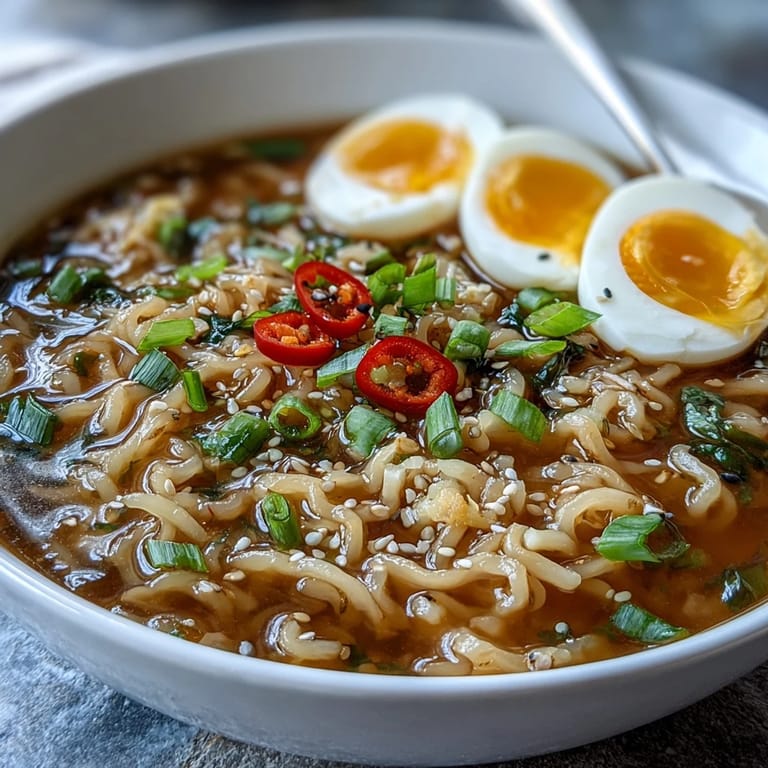
- Soft-boiled eggs (2, halved): Adds richness and makes the bowl feel like a complete meal; the runny yolk becomes its own silky sauce.
- Spring onion, red chili, fresh herbs, and sesame seeds: These toppings transform a simple bowl into something you'd actually post a photo of, plus they add textural contrast that matters.
Tired of Takeout? 🥡
Get 10 meals you can make faster than delivery arrives. Seriously.
One email. No spam. Unsubscribe anytime.
Instructions
- Build your flavor base:
- Pour that bone broth into a medium pot and add the ginger slices, smashed garlic, soy sauce, rice vinegar, and sesame oil all at once. Bring it to a gentle boil over medium heat—you want to hear a quiet bubble, not an aggressive roil.
- Let the magic happen:
- Turn down the heat and let everything simmer for 10 minutes while you handle the noodles in the background. The ginger and garlic will perfume the whole kitchen in the most inviting way.
- Prep the noodles properly:
- Drain your shirataki noodles and rinse them under cold running water for a full minute—yes, really. Place them in a sieve and pour boiling water over them to finish removing any lingering odor that might surprise you later.
- Bring it together:
- Add the prepared noodles to your simmering broth and let them warm through for 2 to 3 minutes. They don't need much time since they're already cooked; you're just heating them through and letting them absorb a bit of that flavor.
- Strain and serve:
- Fish out the ginger and garlic pieces—they've given everything they have—then ladle the noodles and broth evenly into two bowls. The broth should be steaming and fragrant.
- Crown your bowls:
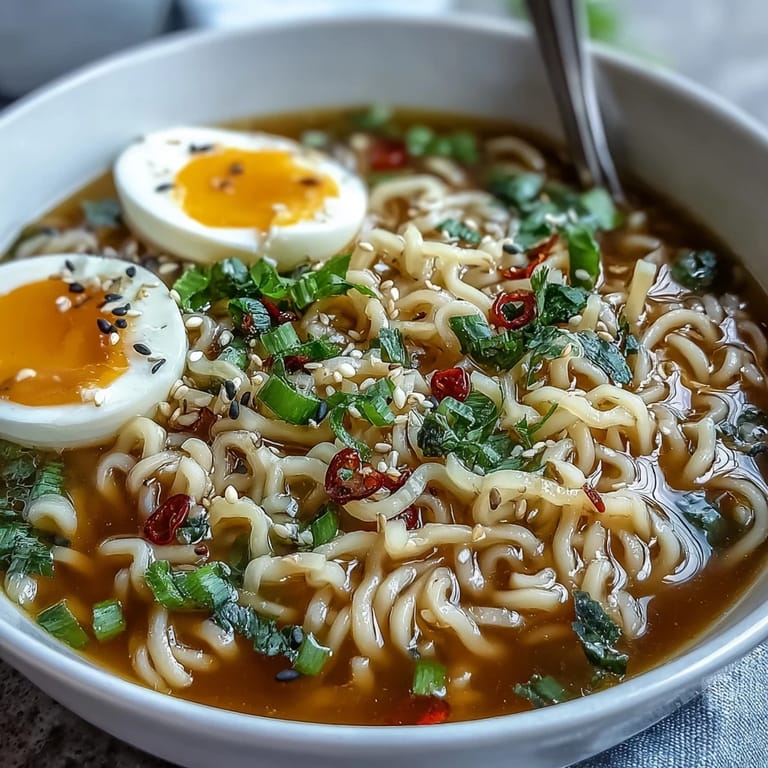
- Top each serving with the soft-boiled egg halves (if using), a scatter of fresh spring onion and sliced chili, a handful of fresh herbs, and a pinch of toasted sesame seeds. Each topping matters because it adds brightness and texture to every spoonful.
 Save
Save There's a moment during these quiet dinners when the steam rises off the bowl and hits your face, and you realize you're sitting with something genuinely good—not because it's trendy or because you're following rules, but because it tastes like intentionality. This dish became the dinner I make when I want to prove to myself that eating well doesn't have to be complicated or joyless.
Why Bone Broth Changes Everything
I used to make this with regular vegetable broth because I had some lingering doubt about bone broth, and it was fine—pleasant, even. Then I finally invested in a quality bone broth, and suddenly the whole bowl shifted from nice to genuinely nourishing. The difference isn't dramatic or flashy; it's in the way the broth coats your mouth and the kind of fullness that lingers without heaviness. You'll taste the difference immediately, and you'll understand why this ingredient matters enough to build a dish around.
The Art of the Perfect Topping
The toppings aren't just decoration—they're the textural and flavor story that makes each spoonful interesting. A soft-boiled egg adds richness, the fresh spring onion brings a sharp green bite, the chili whispers heat, and the herbs and sesame seeds make it feel intentional. You can keep this simple with just an egg and some green onion, or go full-on with every option depending on your mood and what you have on hand.
Making It Your Own
This recipe is a template waiting for your personal touch, and that's what makes it so returnable. I've made it with shredded rotisserie chicken when I wanted extra protein, stirred in some miso paste for deeper umami, added mushrooms because they were there, and even thrown in some greens to wilt gently in the hot broth. The bone broth and shirataki noodles are your constants, and everything else bends to what you're craving that evening.
- Add cooked chicken, tofu, or shrimp to make this a heartier main course that still feels light.
- Swap the rice vinegar for a squeeze of fresh lime juice if you want brightness instead of gentle tang.
- Keep extra toppings chopped and ready so you can customize each bowl to your exact mood.
 Save
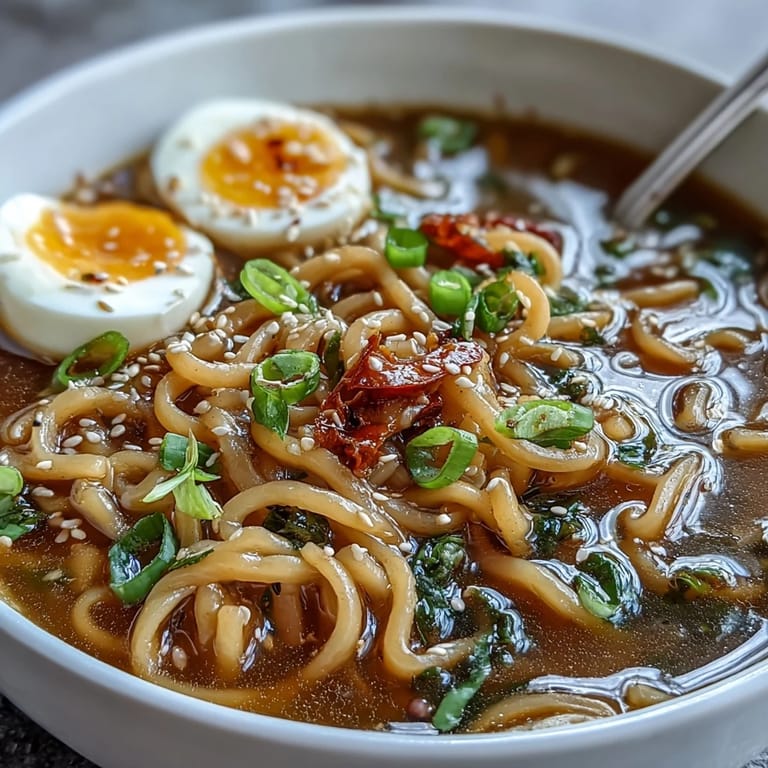
Save This bowl taught me that comfort doesn't require carbs, and that eating well can taste this good. Come back to it whenever you need something warm, nourishing, and done before you know it.
Recipe FAQs
- → What do shirataki noodles taste like?
Shirataki noodles have a very mild, neutral taste on their own. They readily absorb the flavors of whatever broth or sauce they're cooked in, making them perfect for aromatic dishes like this warming bowl.
- → Do I need to cook shirataki noodles?
Shirataki noodles come pre-cooked and simply need thorough rinsing under cold water and a quick blanch in boiling water to remove any natural odor. Then simmer them in the broth for 2-3 minutes to heat through and absorb flavors.
- → Can I make this vegetarian?
Absolutely. Substitute the bone broth with a high-quality vegetable broth and omit the eggs or replace them with marinated tofu cubes. The result remains flavorful and satisfying.
- → How long does the broth keep?
The prepared broth will keep refrigerated for up to 4 days in an airtight container. For best results, store the broth separately from the noodles and reheat gently before combining.
- → What other toppings work well?
Sautéed mushrooms, blanched bok choy, nori sheets, pickled carrots, daikon radish, shredded chicken, or seared tofu all make excellent additions. Customize based on your preferences and what you have on hand.
- → Is this suitable for meal prep?
Yes. Prepare the broth in advance and store separately. Rinse and prep the noodles, keeping them refrigerated. When ready to serve, reheat the broth, simmer the noodles briefly, and add fresh toppings.