 Save
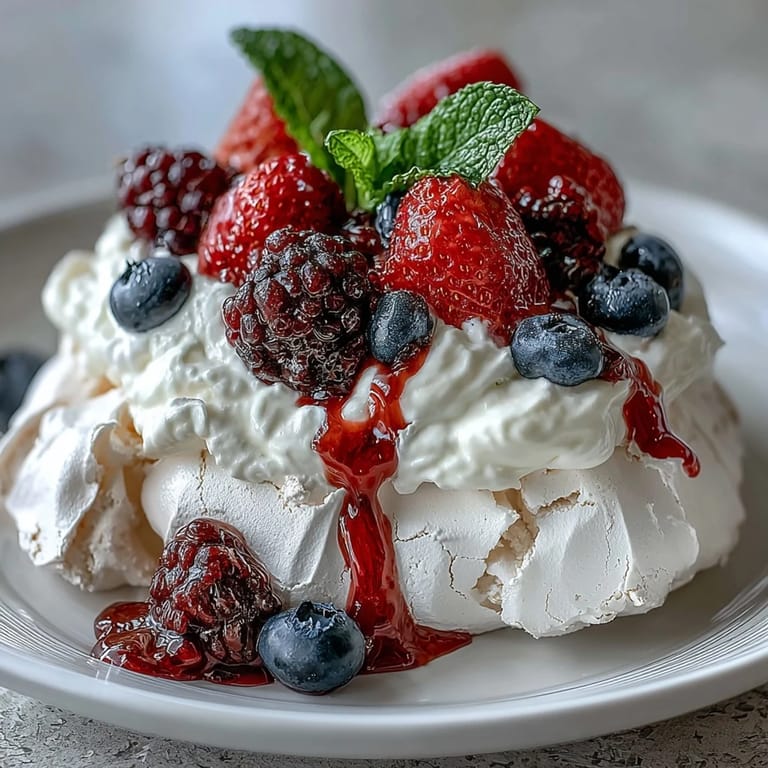
Save The first time pavlova came into my kitchen, it was a rainy afternoon and I was testing recipes for a spring dinner party. I remember the hiss of my electric mixer and the subtle sweet tang in the air as egg whites transformed from opaque to glossy peaks. My cat watched the whole process with unusual intensity — maybe it was the rhythmic whir or the promise of leftover cream. I always noticed how the silence after baking was sharp, as if the whole apartment paused in anticipation. That moment before toppings, just staring at the cloud-like meringue, felt oddly inspiring.
One spring, I brought pavlova to a neighborhood garden potluck and wound up fussing with berries in the shade, answering questions about the dessert’s origins. People were gathered around, curious and ready, and there was a moment when the meringue cracked lightly under my spatula and we all laughed, admitting that perfection isn’t always necessary. Sharing the pavlova was a reminder that beauty lies in the casual confidence of homemade food.
Ingredients
- Egg Whites: They must be room temperature for meringue stability — colder egg whites simply don’t whip as well, trust me.
- Superfine Sugar: The fine grains dissolve perfectly, giving pavlova its delicate crunch without any graininess.
- Cornstarch: A little goes a long way – it’s the secret to that soft marshmallow center you crave.
- White Vinegar: Just a splash helps the meringue hold its shape and keeps it from collapsing.
- Vanilla Extract: Adds warmth to the meringue and whipped cream; choose pure extract for a cleaner taste.
- Heavy Whipping Cream: Use it ice cold and whip just until you see soft curls, otherwise it can go from creamy to grainy in seconds.
- Powdered Sugar: Makes the whipped cream luxuriously smooth and complements the tartness of berries.
- Assorted Fresh Berries: Always dry them after rinsing or they can make your pavlova soggy, which I learned by mistake.
- Mint Leaves: Totally optional, but they add a fresh aroma and a pop of color if you want to impress.
Tired of Takeout? 🥡
Get 10 meals you can make faster than delivery arrives. Seriously.
One email. No spam. Unsubscribe anytime.
Instructions
- Prepare the Baking Sheet:
- Draw an 8-inch circle on parchment, flipping it over so pencil marks don’t end up in your dessert.
- Whip the Egg Whites:
- Start mixing in a spotless, dry bowl—the egg whites will froth quietly, then turn glossy and light, like a cloud.
- Add the Sugar Gradually:
- Sprinkle sugar slowly, beating until stiff, glossy peaks form; the mixture should hold its shape when you lift the whisk.
- Fold in Cornstarch, Vinegar, and Vanilla:
- Gently stir them in with a spatula, being careful not to deflate the airy mixture at this stage.
- Shape the Meringue:
- Heap it onto the circle and sculpt slightly higher edges with a spoon, creating a well for cream and fruit later.
- Bake and Cool:
- Bake until the exterior is crisp and pale, then let the pavlova cool in the oven with the door ajar—it will sound delicately hollow if tapped.
- Whip the Cream:
- Combine cream, powdered sugar, and vanilla, whipping just until soft peaks form; stop as soon as it looks billowy.
- Assemble and Top:
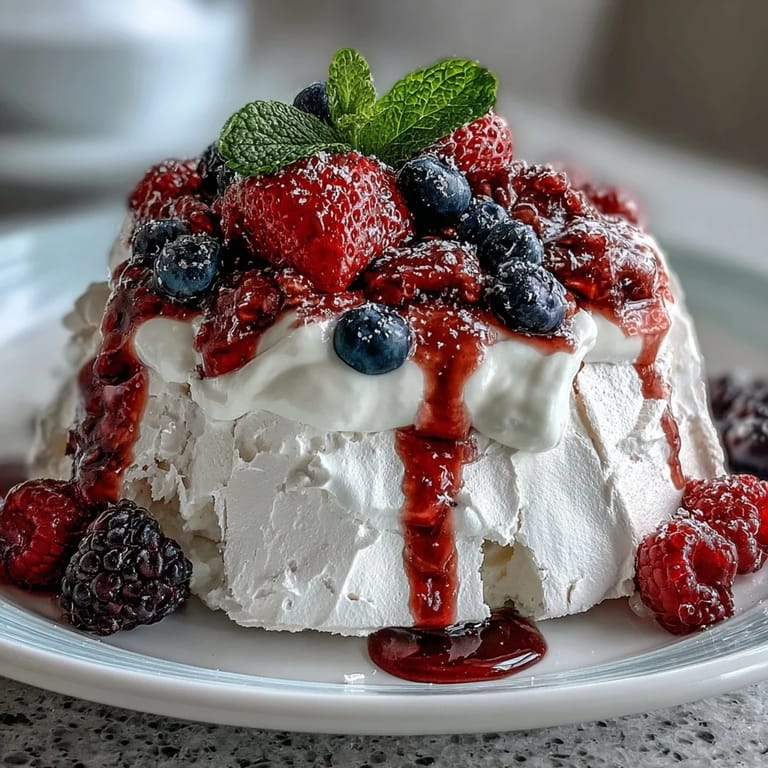
- Spoon whipped cream in the center, then scatter berries over, letting some fall along the edges for drama.
- Garnish and Serve:
- Add mint if using and serve soon—pavlova waits for no one, or it might begin to soften.
 Save
Save It was a quiet Sunday when the pavlova became more than dessert: after assembling, my partner and I ate it straight from the platter, giggling with whipped cream on our noses, and agreed it tasted like celebration. Sometimes a recipe invites joy without ceremony, turning ordinary moments into little feasts.
Finding Your Berry Bliss
I realized the fresh toppings make pavlova versatile — one week, tart currants replaced strawberries and the flavors sang together. Experimenting with fruit combos feels like painting, and there’s no wrong answer if the berries are ripe and fragrant.
Getting the Perfect Cream
If heavy cream is too warm, it won’t whip properly and can turn almost buttery before you notice. I learned to chill my mixing bowl for an extra minute for reliable results, a small trick that’s worth the effort.
Cracking the Meringue Code
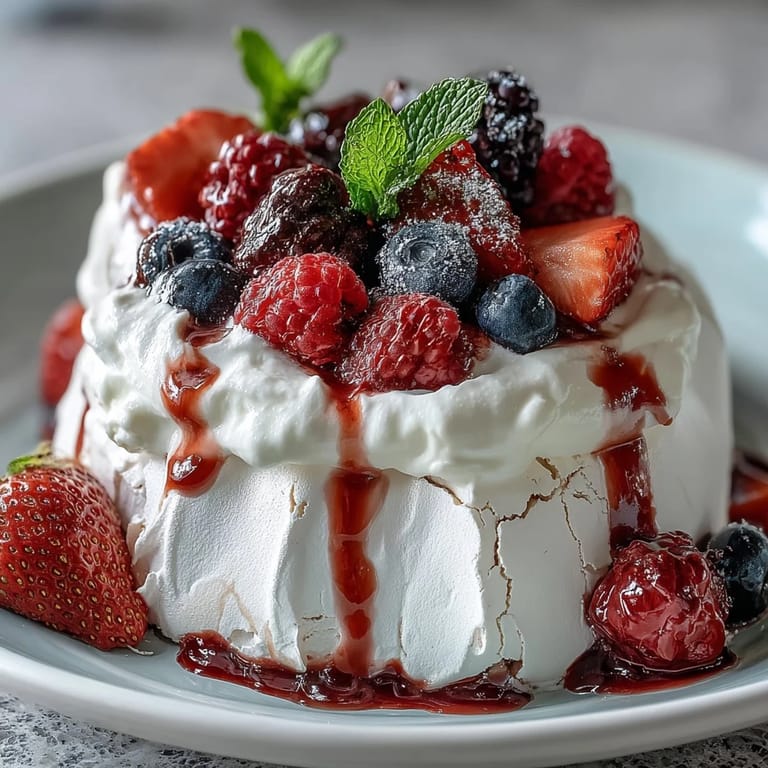
Meringues sometimes crack, especially if you rush cooling or fold ingredients too vigorously — don’t panic, the topping hides imperfections and adds rustic charm.
- Assemble as close to serving as possible for best texture.
- Keep berries dry for crisp meringue.
- Pavlova has more forgiving personality than you’d expect — embrace those cracks.
 Save
Save Every pavlova feels new, and no two are ever the same. Share it with someone you like, and savor the airy sweetness together.
Recipe FAQs
- → What makes pavlova's meringue unique?
The meringue is crisp on the outside but has a soft, marshmallowy center, achieved by gentle baking and cooling.
- → Can I use fruit other than berries?
Yes, substitute berries with seasonal fruits like kiwi, mango, or stone fruit for a varied topping.
- → What tips ensure success with meringue?
Use room-temperature egg whites and avoid humidity; beat until stiff peaks, adding sugar gradually for gloss and structure.
- → Is pavlova gluten-free?
Yes, the base, cream, and fruit are naturally gluten-free, but always check labels for cross-contamination.
- → Which wines pair well with pavlova?
Light sparkling wines like Moscato d'Asti or Champagne complement the fresh sweetness and fruity toppings perfectly.