 Save
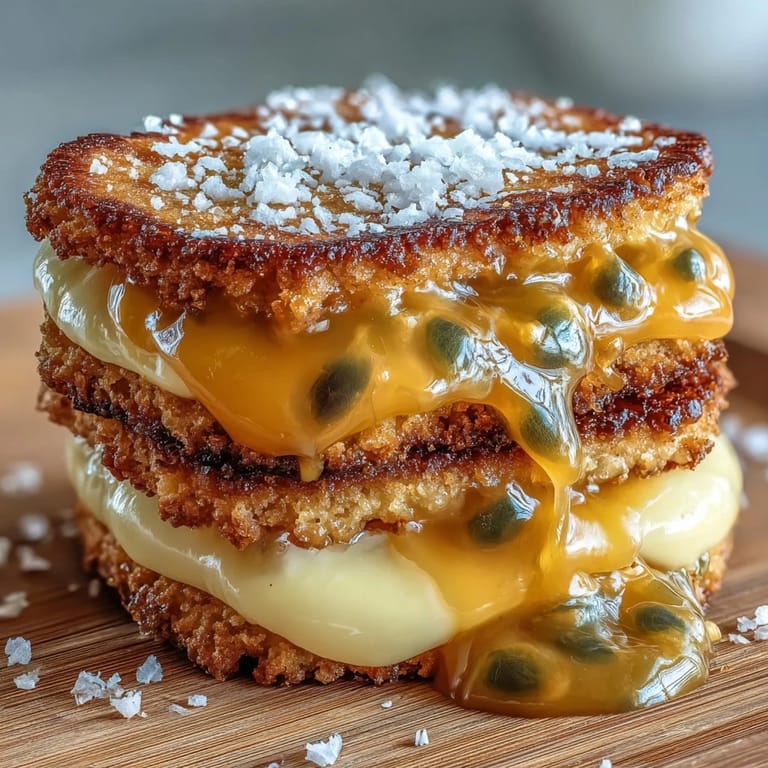
Save My neighbor brought over a jar of homemade passionfruit pulp one summer afternoon, and I stood in my kitchen staring at it for days, wondering what to do with something so exotic and tart. Then it hit me—why not make a curd, something silky and bright to nestle between butter cookies? That first batch was imperfect, the curd too thin, the cookies a touch overdone, but when I bit into that tangy-sweet sandwich cookie, I understood why people fuss over teatime treats.
I made these for my sister's book club gathering, and watching everyone's faces light up when they bit through to the curd filling—that moment when someone closes their eyes for just a second—made me realize these weren't just cookies anymore. They became the thing people asked me to bring to every gathering after that.
Ingredients
- Unsalted butter (225 g for cookies, 60 g for curd): Softened butter creams into the dough to create that tender crumb, while the cubed butter in the curd adds richness and silkiness without breaking the emulsion.
- Granulated sugar (150 g for cookies, 100 g for curd): The cookie sugar dissolves into the butter to create structure, while the curd sugar tempers the passionfruit's tartness and helps the mixture set properly.
- Large eggs (1 for cookies, 2 for curd): One egg binds the cookie dough gently, but the two eggs in the curd are essential—they're what thicken it into that glossy, spoonable consistency.
- Pure vanilla extract (1 tsp): Just a teaspoon rounds out the cookie's flavor without overpowering the delicate passionfruit filling.
- All-purpose flour (280 g): Measure by weight if you can; it makes the cookies more tender and consistent than scooping directly from the bag.
- Baking powder (1/2 tsp): Gives the cookies a subtle lift so they're tender rather than dense.
- Salt (1/4 tsp for dough, pinch for curd): A small amount in each component balances sweetness and brings out deeper flavors.
- Passionfruit pulp (120 ml, fresh or frozen): Strain out the seeds if they bother you, though some people love the texture they add; frozen pulp works beautifully and is often easier to find than fresh.
- Lemon juice (1 tsp): A small squeeze brightens the curd and prevents it from tasting one-note sweet.
Tired of Takeout? 🥡
Get 10 meals you can make faster than delivery arrives. Seriously.
One email. No spam. Unsubscribe anytime.
Instructions
- Make the passionfruit curd first:
- Whisk together passionfruit pulp, sugar, eggs, lemon juice, and salt in a saucepan, then place it over medium-low heat. Stir constantly—don't walk away—watching for the moment it thickens enough to coat the back of a spoon, which usually takes about 6 to 8 minutes.
- Finish the curd with butter:
- Once thick, remove from heat and whisk in cubed butter until the mixture turns glossy and smooth. Strain it through a fine mesh to catch any bits of cooked egg, then press plastic wrap directly onto the surface to prevent a skin from forming while it chills.
- Cream your cookie butter and sugar:
- In a separate bowl, beat softened butter and granulated sugar together until the mixture is pale and fluffy—this usually takes a few minutes with an electric mixer. This step builds air into the dough, which makes the cookies tender.
- Build the cookie dough gently:
- Beat in the egg and vanilla, then whisk your dry ingredients together in another bowl. Fold them into the wet mixture slowly, stirring just until combined; overworking develops gluten and makes tough cookies.
- Chill the dough:
- Divide the dough in half, flatten each piece into a disk, wrap them up, and let them rest in the fridge for at least 30 minutes. Cold dough is easier to roll and less likely to spread too much during baking.
- Roll and cut with confidence:
- On a lightly floured surface, roll the dough to about 5 mm thick—thin enough to be delicate but thick enough to hold the curd without breaking. Use a 5 cm cookie cutter and place the rounds on parchment-lined sheets.
- Bake until the edges turn golden:
- At 175°C (350°F), they'll need 10 to 12 minutes—watch for the edges to shift from pale to just golden while the centers stay soft. Let them cool completely on the baking sheet for a few minutes, then transfer to a rack.
- Assemble with care:
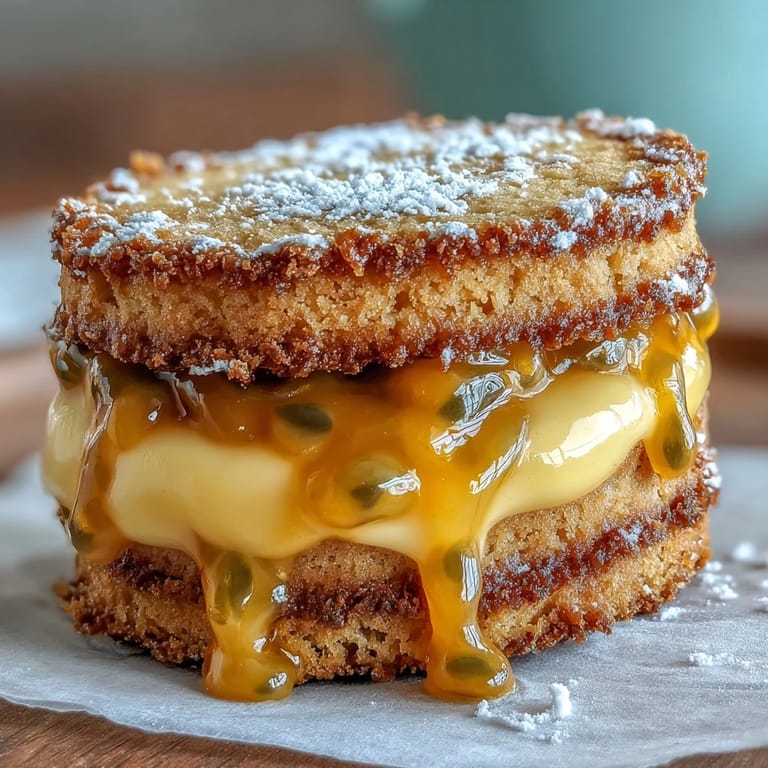
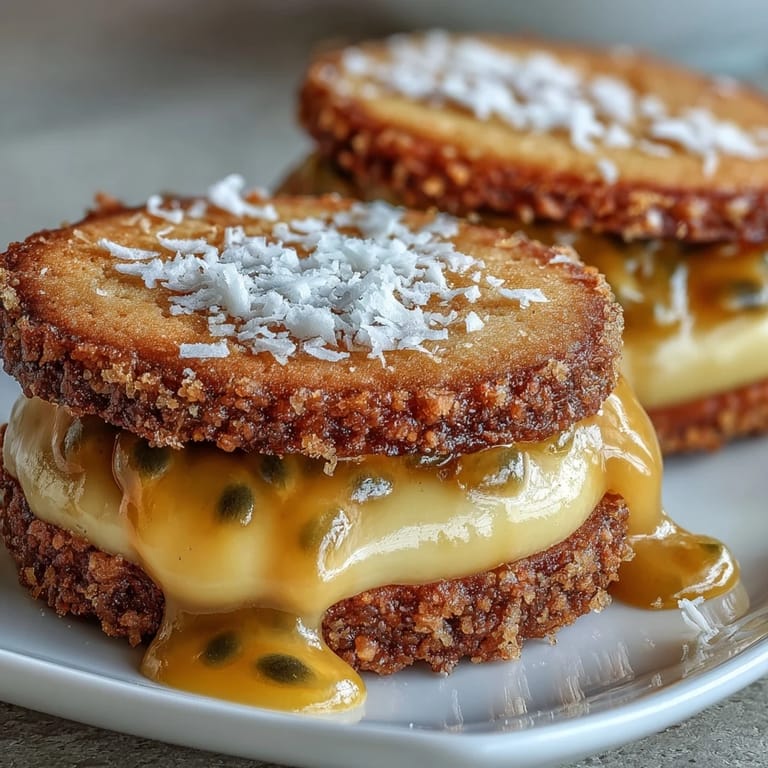
- Once everything is cool, pair up similar-sized cookies and pipe or spoon about 1 teaspoon of chilled curd onto the flat side of one cookie. Press another cookie gently on top and repeat until you've sandwiched them all.
 Save
Save There's something about biting into a homemade sandwich cookie—that soft give of the butter cookie, the bright burst of passionfruit—that reminds me why I love to bake. These cookies have a way of turning an ordinary afternoon into something a little more special.
Why Passionfruit Matters
Passionfruit has this unique quality where it's simultaneously sweet and tart, almost perfumy, which makes it perfect for a curd. Unlike lemon curd, which can feel a bit sharp, passionfruit feels more sophisticated and floral. The flavor doesn't fade during baking or storing; if anything, it deepens as the cookies sit.
Storage and Make-Ahead Tips
The curd can be made up to a week ahead and stored in an airtight container in the fridge, which takes pressure off your baking day. The plain cookies also keep well in an airtight container for a few days before assembly, so you can bake them whenever suits your schedule. Once assembled, these cookies are best eaten within 2 to 3 days, stored in the fridge to keep the curd from softening.
Variations and Pairings
If you can't find passionfruit pulp, frozen and thawed work beautifully, or you can swap in lime or lemon curd for something more citrusy. A light dusting of powdered sugar before serving adds elegance, and these cookies pair wonderfully with Earl Grey tea, a sparkling white wine, or even a small glass of dessert wine. If you're feeling adventurous, a tiny pinch of cardamom in the cookie dough adds an unexpected warmth that plays nicely against the bright fruit.
- Frozen passionfruit pulp is often easier to find and works just as well as fresh once thawed and strained.
- If the curd breaks or separates while cooking, whisk in an egg yolk and cook gently until it comes back together.
- For perfectly matched pairs, use the same cutter for all cookies so they sandwich together evenly without curd squishing out.
 Save
Save These cookies remind me that the best desserts are the ones made with care and a little patience. Serve them at your next gathering and watch people's faces light up the same way mine did.
Recipe FAQs
- → How do I ensure the passionfruit curd thickens properly?
Whisk the mixture constantly over medium-low heat until it thickly coats the back of a spoon, about 6–8 minutes, then remove from heat and stir in butter for smoothness.
- → Why chill the dough before baking?
Chilling firms the dough, preventing excessive spreading during baking, resulting in tender, well-shaped cookies.
- → Can I substitute other citrus for passionfruit?
Yes, lemon or lime curd works well as a tangy alternative, offering different but equally vibrant flavors.
- → How should I store the filled cookies?
Keep them in an airtight container refrigerated to maintain freshness and curd consistency until serving.
- → What texture can I expect from these cookies?
Delicate and buttery sugar cookies with a soft, tangy passionfruit curd center that creates a moist, flavorful bite.
- → Is it necessary to strain the passionfruit pulp?
Straining removes seeds for a smooth curd texture, but leaving seeds is optional based on personal preference.