 Save
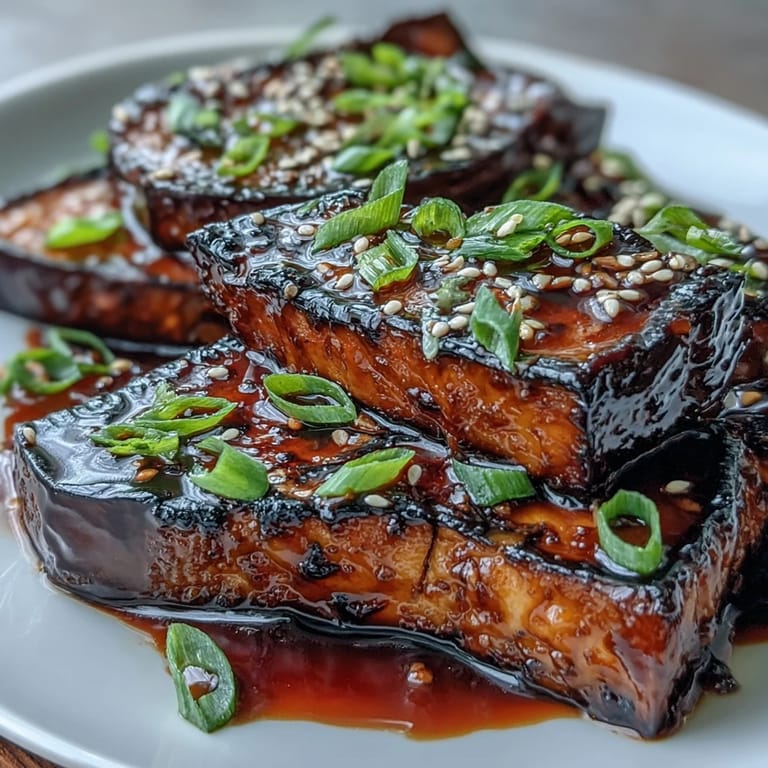
Save Last summer, while browsing an Asian market for something different, I spotted bundles of white miso paste and suddenly remembered a restaurant dish that stopped me mid-bite: thick, caramelized eggplant slices that tasted nothing like the watery vegetable I'd grown up avoiding. That afternoon, I decided to chase that memory in my own kitchen, and what emerged was this miso-glazed version that tastes like umami and butter had a conversation on your plate.
I made this for a friend who claimed eggplant was her "sworn enemy," and she went back for seconds without realizing what she was eating until I told her. Watching her face shift from skepticism to genuine surprise was worth every minute of prep work.
Ingredients
- Large eggplants: Two thick rounds create satisfying "steaks" that hold their shape and get golden-brown edges while staying creamy inside, though smaller Japanese eggplants work beautifully too if you prefer more delicate slices.
- White miso paste: The star player here, bringing salty-sweet depth and a funky umami backbone that regular soy sauce alone can never achieve, so don't skip it or substitute it with red miso, which overpowers everything.
- Mirin: This sweet rice wine adds a subtle caramel note and helps the glaze stick and bubble rather than slide off, though dry sherry works in a pinch if you're in a bind.
- Soy sauce or tamari: The gluten-free swap matters more than you'd think for flavor balance, so taste as you go if switching brands.
- Maple syrup or honey: Just enough sweetness to balance the miso's saltiness without making this taste like dessert, and it contributes to that gorgeous caramelization.
- Sesame oil: Use the toasted kind for deeper, nuttier flavor that wakes up every other ingredient in the glaze.
- Rice vinegar: A single teaspoon cuts through the richness and keeps the dish from feeling heavy, a lesson I learned after my first batch tasted almost cloying.
- Garlic and ginger: Fresh and freshly grated, these prevent the glaze from tasting one-dimensional and add a slight heat that builds as you eat.
- Green onions, sesame seeds, and cilantro: The garnish isn't optional if you want this to look as good as it tastes, though cilantro can be skipped if it's your sworn enemy instead.
Tired of Takeout? 🥡
Get 10 meals you can make faster than delivery arrives. Seriously.
One email. No spam. Unsubscribe anytime.
Instructions
- Heat your oven and prep your stage:
- Preheat to 400°F and line a baking sheet with parchment paper so you're not fighting stuck eggplant later. This simple step changes everything.
- Arrange and oil the eggplant:
- Lay your slices flat, brush lightly with sesame oil, and season with salt so they start drawing out moisture and flavor right away. Don't be shy here, but don't drown them either.
- First roast for tenderness:
- Twenty minutes at 400°F, flipping halfway through, until the eggplant is soft and the edges are turning golden-brown. You'll know it's ready when a fork slides through without resistance.
- Build your glaze while the oven works:
- Whisk white miso, mirin, soy sauce, maple syrup, sesame oil, rice vinegar, garlic, and ginger together in a small bowl, tasting as you go. The mixture should smell funky, sweet, and alive.
- Brush and caramelize:
- Remove eggplant from the oven, brush the tops generously with glaze, then return for 8 to 10 more minutes until the glaze is bubbling and slightly darkened. This is where the magic happens, so watch it gently.
- Finish with finesse:
- Transfer to plates and scatter green onions, sesame seeds, and cilantro across the top while everything is still hot. Serve immediately because cold eggplant is nobody's friend.
 Save
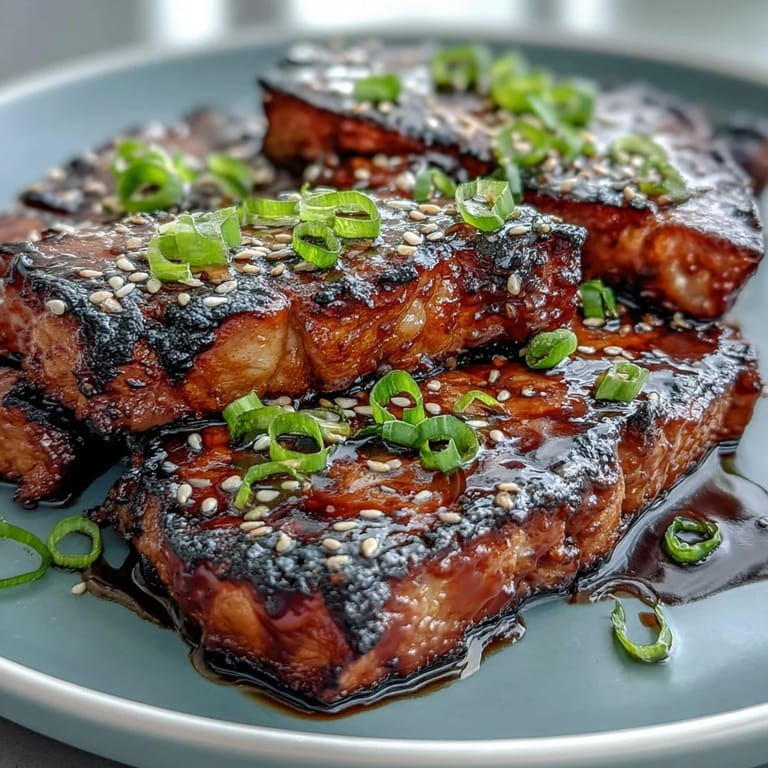
Save This dish transformed from an experiment into something I crave, the kind of meal where you find yourself scraping every last bit of caramelized glaze off the plate and wondering why you didn't make it sooner. There's a quiet satisfaction in turning something as often-dismissed as eggplant into the main event.
Why Eggplant Steaks Matter
Thick slices change the entire conversation around eggplant, creating surface area that gets properly golden while the inside stays creamy, almost buttery. Thin slices tend to dry out or turn into chips, missing the whole point of why this vegetable deserves respect.
The Miso Glaze Secret
The glaze works because it's a balance of salty, sweet, funky, and bright, with each component pulling its weight rather than competing for attention. When you brush it on already-soft eggplant, it doesn't absorb so much that the slices become soggy, but rather caramelizes into a glossy coating that catches the light and makes people lean in to smell it before tasting.
Making This Your Own
The foundation is strong enough that you can play around without losing the soul of the dish, whether that means swapping proteins with tofu, adding a pinch of chili flakes for heat, or serving it over rice instead of on a plate. I've broiled the glazed steaks for an extra 1 to 2 minutes under high heat to deepen the caramelization and add char, though this is optional if your oven runs hot.
- For extra char and deeper caramelization, broil the glazed eggplant for 1 to 2 minutes at the end, watching closely so it doesn't burn.
- Serve with steamed rice, quinoa, or a bright green salad to balance the richness of the miso glaze.
- Swap maple syrup for agave nectar to keep everything vegan if that matters to your table.
 Save
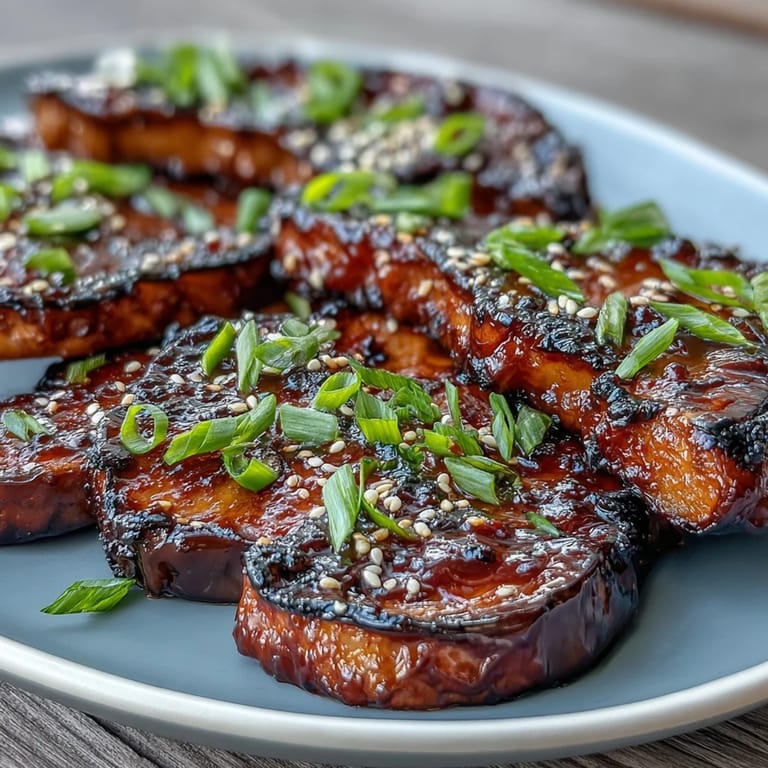
Save This recipe proved to me that vegetarian cooking doesn't mean settling for lesser versions of meat dishes, but rather celebrating what vegetables can be when treated with intention and respect. Make it once for yourself, then make it again for someone you want to impress.
Recipe FAQs
- → What is the best way to cut eggplant for this dish?
Cut the eggplant into 1-inch thick rounds to ensure even roasting and a steak-like texture that holds the glaze well.
- → How can I make the glaze stick better to the eggplant?
Lightly brush the eggplant slices with sesame oil and roast them partially before applying the miso glaze. This helps the glaze caramelize and adhere nicely during the final roasting.
- → Can I substitute any ingredients in the miso glaze?
Yes, you can substitute mirin with dry sherry and maple syrup with honey or agave to suit dietary preferences while maintaining the balance of sweet and savory.
- → Is it possible to add extra flavor or heat to the dish?
Absolutely, adding chili flakes to the glaze or as a garnish will introduce a gentle heat that complements the umami flavors.
- → What are good serving suggestions for these eggplant steaks?
Serve alongside steamed rice, quinoa, or a fresh green salad to create a complete and satisfying meal with contrasting textures.
- → How do I ensure the glaze caramelizes properly?
Return the eggplant to the oven after brushing on the glaze and roast until it bubbles and turns glossy, roughly 8–10 minutes; broiling briefly can intensify caramelization.