 Save
Save My neighbor knocked on my door one Saturday morning with a jar of sourdough starter and a sheepish grin, explaining she'd accidentally fed it twice and needed to find it a home. That innocent gesture spiraled into weekend baking experiments, and this lemon blueberry pull-apart bread became the accidental star that kept us both coming back. There's something almost magical about how sourdough's tang plays against bright lemon and bursts of blueberry, and the pull-apart format means everyone gets their own perfectly layered moment.
I made this for my book club last spring, and watching seven different people pull apart their own piece at the same time, drizzle glaze everywhere, and then go silent while eating felt like a small victory. Someone asked if I'd bought it from a bakery, which honestly might be the highest compliment a home baker can receive, especially when you're using a starter that arrived in a mason jar.
Ingredients
- All-purpose flour (2 1/2 cups): The foundation that stretches into tender layers, and I've learned that measuring by weight saves the frustration of dense bread.
- Granulated sugar (1/4 cup for dough): Just enough sweetness to feed the starter without overwhelming the tangy sourdough character.
- Fine sea salt (1/2 teaspoon): Salt strengthens the gluten and brings out every other flavor, so don't skip it or reduce it.
- Active sourdough starter, fed and bubbly (1/2 cup): This is your magic ingredient, and it needs to be actively bubbling with visible rise, not dormant or sluggish.
- Whole milk, lukewarm (1/2 cup): Lukewarm is the key—too hot kills the starter's living cultures, too cold and it won't wake up properly.
- Large eggs at room temperature (2): Room temperature eggs mix more smoothly into the dough, creating a silkier crumb.
- Unsalted butter, softened (1/4 cup): Soft butter incorporates evenly without overworking the dough, which is how you get those gorgeous layers.
- Granulated sugar for filling (1/2 cup): This creates little pockets of sweetness throughout, so measure generously and don't be shy.
- Finely grated lemon zest (2 tablespoons from about 2 lemons): The oils in fresh zest carry all the brightness, so a microplane grater changes everything compared to using extract.
- Fresh blueberries (1 cup): If using frozen, keep them frozen to prevent bleeding into the dough, which I learned the sticky way.
- Unsalted butter, melted (2 tablespoons): This helps the lemon sugar stick and creates a light glaze on each layer.
- Powdered sugar for glaze (1 cup): Sifted if you have time, because lumps show when you drizzle it over warm bread.
- Fresh lemon juice (2-3 tablespoons): Start with 2 tablespoons and add more until the glaze reaches a thin pourable consistency.
Tired of Takeout? 🥡
Get 10 meals you can make faster than delivery arrives. Seriously.
One email. No spam. Unsubscribe anytime.
Instructions
- Mix the dough foundation:
- In a large bowl, whisk together the flour, sugar, and salt so the salt distributes evenly and won't shock the starter. In another bowl, stir the bubbly sourdough starter with the lukewarm milk until it loosens, then add the room-temperature eggs and whisk until combined. Pour the wet mixture into the dry ingredients and use a wooden spoon or your hands to bring everything together until shaggy, then fold in the soft butter piece by piece until fully incorporated.
- Knead for smooth elasticity:
- By hand or with a stand mixer's dough hook, knead for about 7 to 10 minutes until the dough becomes smooth and springy, with just a slight tack that doesn't stick to your fingers. You'll feel the moment it transforms from rough to silky.
- Begin the long, patient rise:
- Cover the bowl with plastic wrap or a damp towel and let it sit at cool room temperature for 6 to 8 hours, or overnight, until the dough roughly doubles in volume. Sourdough moves on its own schedule, so patience here creates the tang and complexity you can't rush.
- Combine the lemon sugar:
- While the dough rises, mix the granulated sugar and finely grated lemon zest in a small bowl, pressing gently with your fingers to release the citrus oils and make it fragrant and bright.
- Roll and assemble the layers:
- On a lightly floured surface, gently roll the risen dough into a rectangle about 12 by 18 inches, being careful not to compress all those air bubbles you've been building. Brush the entire surface with melted butter, sprinkle the lemon sugar evenly across, then scatter the fresh (or frozen) blueberries in a single layer.
- Cut into strips then squares:
- Cut the rectangle into six vertical strips about 3 inches wide, then stack all six strips on top of each other like a little tower. Slice the tower crosswise into six equal squares, which gives you 36 individual layered pieces.
- Arrange vertically in the pan:
- Place each square into a greased 9 by 5-inch loaf pan cut side up, packing them snugly so they rise together and support each other. This is what creates that pull-apart magic.
- Second rise until puffy:
- Cover and let rise for 1 to 2 hours until the squares puff up above the rim of the pan and jiggle slightly when you shake it gently. Don't skip this rise or the bread will be dense.
- Bake to golden perfection:
- Preheat the oven to 350°F and bake for 35 to 40 minutes, until the top is deep golden brown and a skewer inserted into the center comes out clean. If the top starts browning too quickly around 25 minutes, tent loosely with foil.
- Cool slightly then glaze:
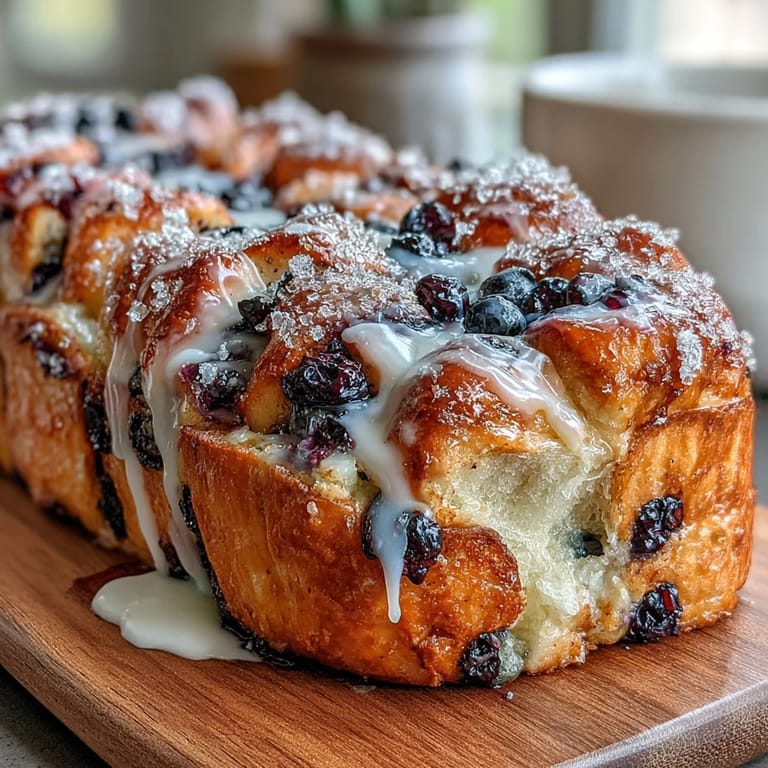
- Let the bread cool in the pan for 15 minutes so it firms up enough to handle, then turn it out onto a wire rack. Whisk the powdered sugar with fresh lemon juice until it reaches a thin, pourable consistency, then drizzle generously over the still-warm bread so it seeps into every crevice.
 Save
Save There was a Sunday morning when my partner woke up to the smell of this baking and came downstairs half-asleep, stood in front of the cooling rack for five full minutes without saying anything, then asked if we could make it again that week. Sometimes food becomes a quiet language in a house, and this bread speaks fluently.
Why Sourdough Makes All the Difference
Regular commercial yeast gives you a bread that rises quickly and tastes pleasant, but sourdough starter brings an entire ecosystem of wild fermentation that develops complexity as it sits overnight. The longer slow rise means more flavor development, better digestibility, and that signature tang that makes people lean in and ask what you did differently. I used to think sourdough was intimidating until I realized it's actually more forgiving than instant yeast because it's alive and adjusts to room temperature naturally.
The Pull-Apart Genius
The first time I made this shape, I was skeptical that stacking cut dough would actually work, but those vertical seams create natural pull points while the layers stay connected at the bottom and sides. Everyone gets individual portions without the awkwardness of slicing a soft warm bread, and the cut sides facing up catch all the glaze and let the lemon sugar layer shine. It's honestly one of my favorite tricks I've accidentally discovered.
Serving Suggestions and Storage Wisdom
Serve this warm from the rack with nothing but maybe a cup of strong tea, or dress it up with a spread of whipped cream cheese if you're feeling generous. Leftovers wrapped in foil reheat beautifully in a 300°F oven for 10 minutes, and it actually tastes even better the next day when the flavors have settled into each other.
- Earl Grey or chamomile tea pairs beautifully because the tannins echo the sourdough tang.
- If making ahead, you can shape it the night before and do the second rise in the morning for fresh-baked brunch timing.
- Frozen blueberries work just as well as fresh and sometimes hold their shape even better, so don't feel limited by season.
 Save
Save Make this bread and you'll understand why my neighbor's accidental starter gift turned into something I make whenever I want to feel like I've got my life together. It's the kind of recipe that tastes like you spent hours but takes mostly just time, which is the best kind of magic.
Recipe FAQs
- → How do you achieve the tangy flavor in this sourdough bread?
The tangy flavor comes from the naturally fermented sourdough starter used in the dough, which is allowed to rise overnight for optimal flavor development.
- → Can frozen blueberries be used instead of fresh ones?
Yes, frozen blueberries can be used directly without thawing to maintain the texture and prevent excess moisture in the dough.
- → What is the purpose of the lemon sugar filling?
The lemon sugar filling adds a bright, citrusy sweetness that complements the tartness of the blueberries and enhances the overall flavor profile.
- → How should the dough be handled for the best texture?
Knead the dough thoroughly until smooth and elastic, then allow it to rise at room temperature covered for 6–8 hours or overnight to develop structure and flavor.
- → What is the recommended way to serve this bread?
Serve it warm, optionally with tea or a mimosa, to enjoy its tender crumb and vibrant flavors at brunch or breakfast.