 Save
Save There's something about the smell of potatoes boiling that takes me back to Sunday dinners at my grandmother's house, where she'd stand at the stove with a wooden spoon, mashing away like she was working through the week's worries. I never understood why she used a ricer instead of just mushing them by hand until I actually tasted the difference—silky, almost cloud-like, nothing like the lumpy versions I'd make at home. Now whenever I make mashed potatoes, I'm chasing that same tender texture she somehow always achieved, and I've learned it's really about patience and technique, not magic.
I remember making these for my first Thanksgiving as an adult, convinced I'd somehow mess up the simplest side dish imaginable. My partner kept peeking over my shoulder asking if they looked right, and I realized in that moment that the best meals aren't about perfection—they're about showing up and doing your best with good ingredients. Those potatoes were lumpy in places, creamier in others, but everyone went back for thirds, and that's when I stopped worrying about making them exactly like my grandmother and started making them exactly like me.
Ingredients
- Yukon Gold or Russet potatoes, 2 lbs: Yukon Golds give you natural creaminess because of their buttery texture, while Russets are starchy and fluffy—pick based on your mood and what you're serving them with.
- Unsalted butter, 4 tbsp: Room temperature butter mixes in smoothly without creating greasy pockets, and unsalted lets you control the seasoning.
- Whole milk, 1/2 cup, warm: Cold milk will shock the hot potatoes and cool everything down, so warm it first or just leave it out of the microwave for a bit.
- Salt and freshly ground black pepper: Season as you go, tasting each time—what tastes right changes depending on everything else on the plate.
- Heavy cream or sour cream, 2 tbsp (optional): This is where you decide if you want them luxurious or just creamy—sour cream adds tang, heavy cream adds richness.
- Chives or parsley, for garnish: A bright green finish does something magical for both looks and taste, even if it's just a handful.
Tired of Takeout? 🥡
Get 10 meals you can make faster than delivery arrives. Seriously.
One email. No spam. Unsubscribe anytime.
Instructions
- Cut and Cover:
- Chunk your potatoes into roughly equal pieces so they cook at the same pace, then cover them with cold salted water in a pot. Starting cold helps them cook evenly throughout.
- Boil Until Tender:
- Bring everything to a rolling boil, then back it down to a gentle simmer for 15–20 minutes. You'll know they're done when a fork slides through without resistance—don't rush this or you'll end up with raw centers.
- Drain and Steam:
- Drain thoroughly through a colander and put them back in the warm pot for a few minutes. This escape of steam is crucial because extra water is the enemy of creamy mashed potatoes.
- Add Fat and Milk:
- Mash in the soft butter and warm milk, working steadily but not obsessively. You want smooth and creamy, not gluey from overmashing.
- Taste and Adjust:
- Season with salt and pepper, then taste before you add the optional cream or sour cream. This is your chance to make them yours.
- Serve with Warmth:
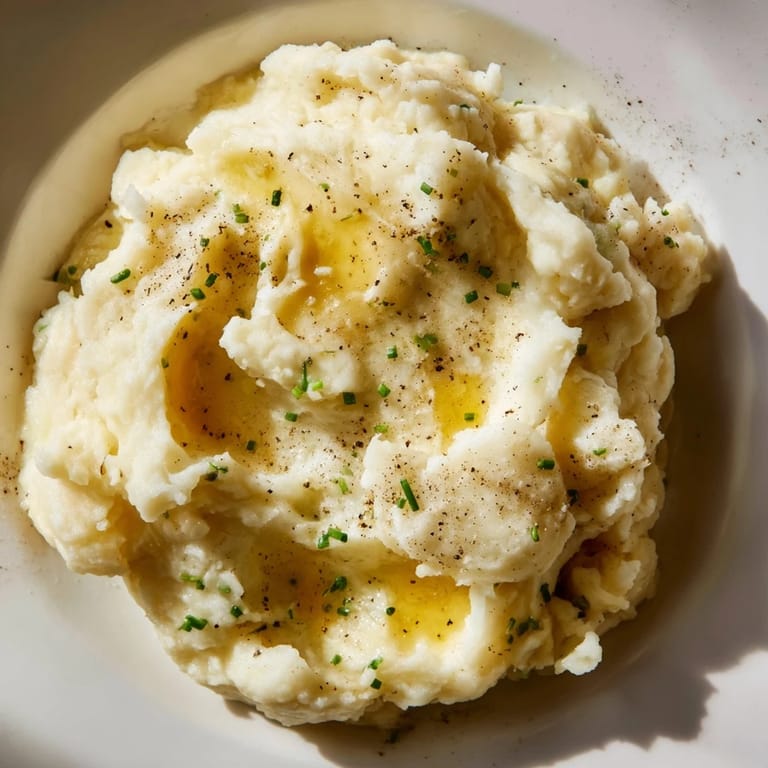
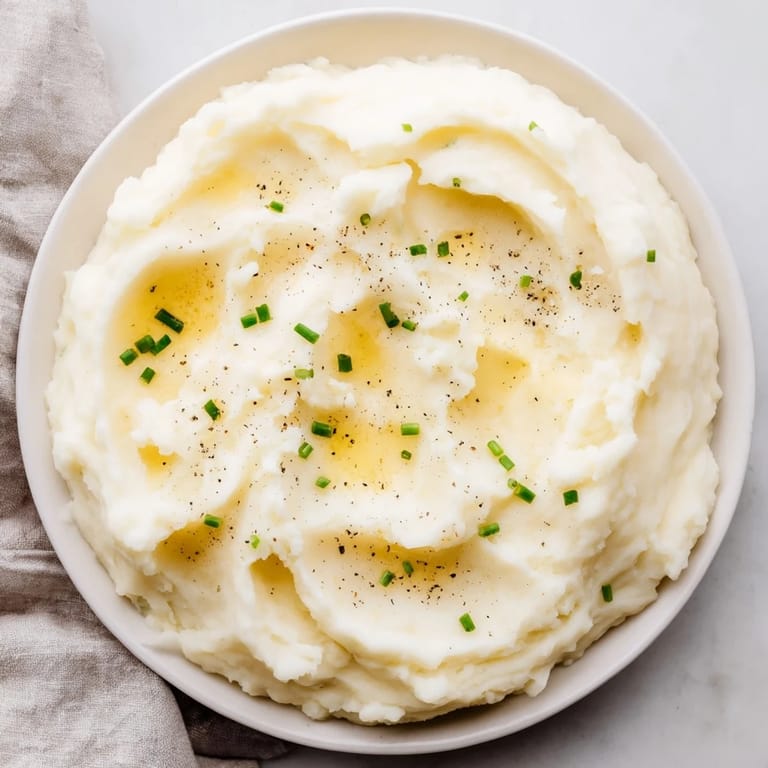
- Transfer to a bowl and top with a pinch of herbs if you have them. Serve right away while they're still steaming.
 Save
Save I made these for my best friend's birthday dinner last year, and I brought them to the table in this old blue serving bowl my mom gave me, and somehow that mattered more than I expected. She'd told me it was her favorite side dish in the world, and watching her take that first bite, close her eyes, and just nod—that's when I understood that good food is really just about care and attention, wrapped up in butter and cream.
The Secret to Silky Texture
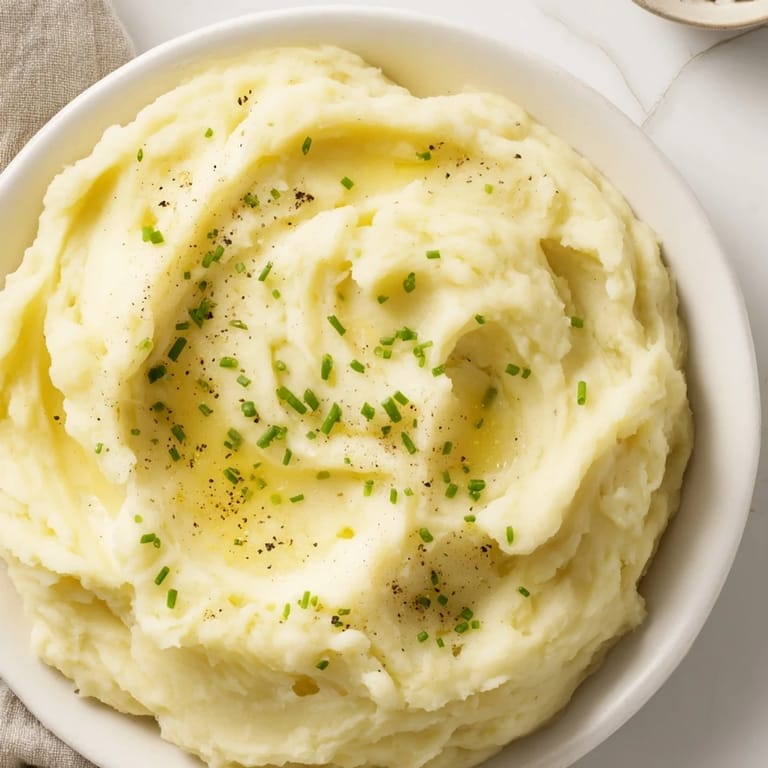
The difference between okay mashed potatoes and the kind people remember comes down to three things working together: choosing the right potato, draining out every drop of extra water, and knowing when to stop mashing. I used to think I had to work them to death with my masher, creating this dense, pasty situation that nobody really wanted. Then I tried a ricer and realized the whole point is to break them down gently while keeping air in them, which is why a ricer—or honestly, even a fork worked gently—can change everything about the texture.
Making Them Your Own
The basic recipe is just a foundation, and the fun part is figuring out what makes them feel like yours. Some nights I'll roast a head of garlic and fold that in, other times I'll crisp up some bacon bits or sauté thinly sliced scallions. I even once stirred in fresh herb butter that I'd made on impulse, and it became my go-to for fancier dinners. The point is that once you nail the basic technique—tender potatoes, proper draining, gentle mashing—you have a canvas to play with.
Storage and Reheating
Mashed potatoes actually keep beautifully in the fridge for a few days, and they reheat better than you'd think if you add a splash of warm milk and stir them gently over low heat. I've also frozen them successfully, though the texture shifts slightly once thawed.
- Store them in an airtight container in the fridge for up to 3 days without losing much quality.
- Reheat slowly with a little extra milk, stirring often so they warm through evenly instead of cooking at the edges.
- Frozen potatoes work in a pinch but best used for texture-flexible applications like shepherd's pie or potato pancakes.
 Save
Save Good mashed potatoes are one of those dishes that feels simple because it is, but they matter more than you'd expect at any table. They're comfort and care in a bowl.
Recipe FAQs
- → What potatoes work best for this dish?
Yukon Gold or Russet potatoes are ideal for their creamy texture and smooth mashing results.
- → How do I achieve extra creamy mashed potatoes?
Add heavy cream or sour cream along with butter and warm milk for richer, silkier potatoes.
- → Can I prepare this dish dairy-free?
Yes, substitute milk and butter with plant-based alternatives while maintaining the same technique.
- → What tools are recommended for mashing?
Use a potato masher or a ricer for smoother, lump-free mashed potatoes.
- → How can I add extra flavor to the potatoes?
Incorporate roasted garlic, sautéed onions, or grated cheese to enhance the flavor profile.