 Save
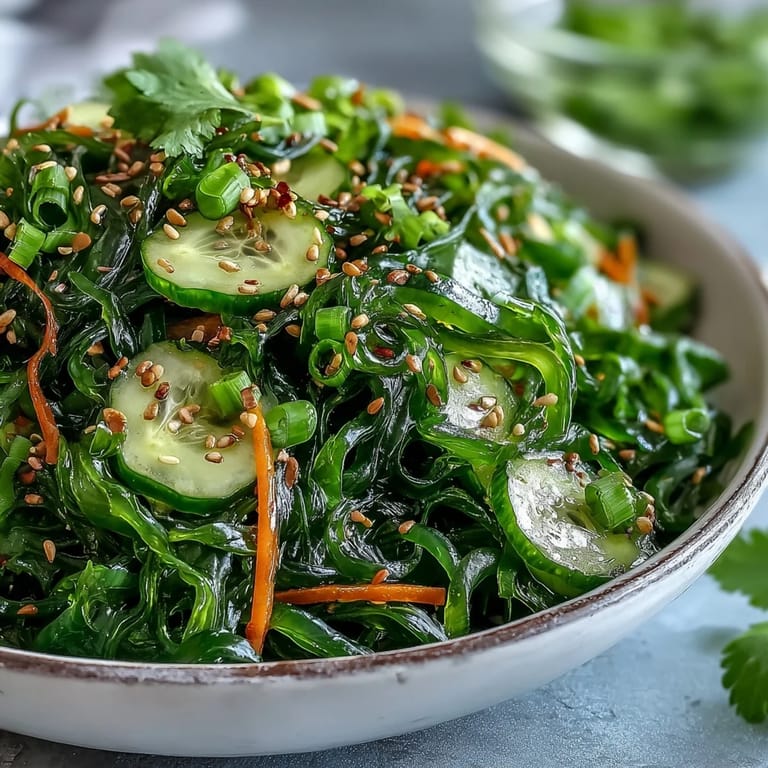
Save My first encounter with seaweed salad happened at a tiny sushi counter where the chef plated it with the kind of care usually reserved for nigiri. The vibrant green-black strands glistened with sesame oil, and one bite transported me—suddenly I understood why this humble appetizer commanded respect. Now, whenever I make it at home, I chase that same perfect balance of briny, nutty, and bright that made me a believer.
I made this for a potluck once when I was short on time and didn't want to show up with store-bought anything. My coworker Sarah took one bite and asked for the recipe on the spot—that's when I realized this salad has quiet power. It's the kind of dish that makes people pause mid-conversation to say, "Wait, what is this?"
Ingredients
- Dried wakame seaweed: This is the star, bringing umami depth and a tender-chewy texture that makes the salad feel substantial without being heavy.
- Toasted sesame oil: Use the good stuff—it's what separates this from tasting thin or one-dimensional, so don't skimp.
- Rice vinegar: It's gentler and slightly sweeter than regular vinegar, which keeps the dressing balanced rather than harsh.
- Fresh ginger: Always grate it yourself; jarred ginger tastes tired and flat compared to the bright bite of fresh.
- Cucumber and carrot: They add crunch and color, but slice them thin so they actually absorb the dressing instead of sitting separate.
- Soy sauce or tamari: Go low-sodium here so you're in control of the saltiness—you can always add more, but you can't take it back.
- Maple syrup or honey: Just a tablespoon rounds out the flavors, softening the vinegar's sharpness without making it taste sweet.
- Toasted sesame seeds: They belong in both the dressing and the garnish for that nutty flavor that haunts you in the best way.
Tired of Takeout? 🥡
Get 10 meals you can make faster than delivery arrives. Seriously.
One email. No spam. Unsubscribe anytime.
Instructions
- Wake up the seaweed:
- Place the dried wakame in a bowl and cover it with cold water, then wait about 7 to 10 minutes while it transforms from a crispy sheet into tender ribbons. Drain it carefully and squeeze out the excess water with your hands—you want it moist but not waterlogged, or the salad will taste diluted.
- Build your base:
- Toss the rehydrated seaweed with the thinly sliced cucumber, julienned carrot, and scallions in a large bowl. This is where you're creating texture contrast—the soft seaweed against the crisp vegetables.
- Whisk the dressing:
- In a separate small bowl, combine the sesame oil, rice vinegar, soy sauce, grated ginger, maple syrup, sesame seeds, and chili flakes if you want a hint of heat. Whisk it together until the maple syrup dissolves and everything looks emulsified and glossy.
- Marry the flavors:
- Pour the dressing over the salad and toss gently with your hands or salad tongs until every strand of seaweed gets coated. You'll smell the ginger and sesame come alive, which is your signal that you're almost there.
- Finish and serve:
- Transfer to a serving bowl and sprinkle with extra sesame seeds and fresh cilantro or parsley if you have it. You can serve it right away while everything still has sharp edges, or chill it for 15 to 30 minutes so the flavors settle into something even deeper.
 Save
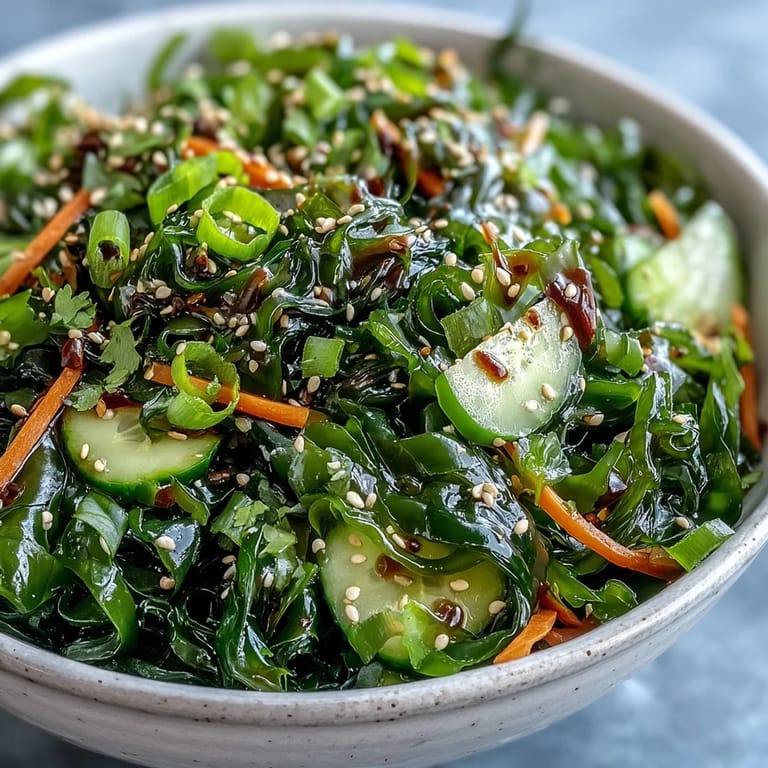
Save I brought this salad to a dinner where I wasn't sure what everyone ate, and it became the thing people actually finished. That's when food stopped being just sustenance and became this quiet act of connection—knowing I made something that nourished people without them having to ask if it was safe for them.
The Ginger Question
Fresh ginger is non-negotiable here, and I learned this the hard way by trying to use ground ginger once. The fresh kind releases its oils when grated, creating this bright, almost peppery note that grounds the whole dish—ground ginger tastes dusty by comparison. Grate it on a microplane if you have one, or use the fine side of a box grater, and don't bother peeling it first.
Timing and Temperature
This salad actually improves when it sits for a little while because the seaweed continues to soften and the vegetables begin absorbing the dressing. I used to serve it immediately and wondered why restaurant versions tasted more integrated—now I always chill it for 15 or 20 minutes, and the difference is noticeable. The cold also refreshes the salad, making it feel lighter and cleaner on the palate.
Making It Your Own
Once you understand the framework, this salad invites improvisation in a way that respects the original. I've added thinly sliced radish for extra crunch, shredded red cabbage for color, and even a handful of edamame when I wanted more protein. The dressing is forgiving enough that small changes don't break it, as long as you keep the sesame oil and ginger as anchors.
- If you like heat, increase the chili flakes or add a tiny drop of sriracha to the dressing.
- For a more substantial side dish, toss in some cooked sushi rice or quinoa after chilling.
- Taste as you go and adjust sweetness, saltiness, and acidity to match your mood—this salad should feel personal, not prescribed.
 Save
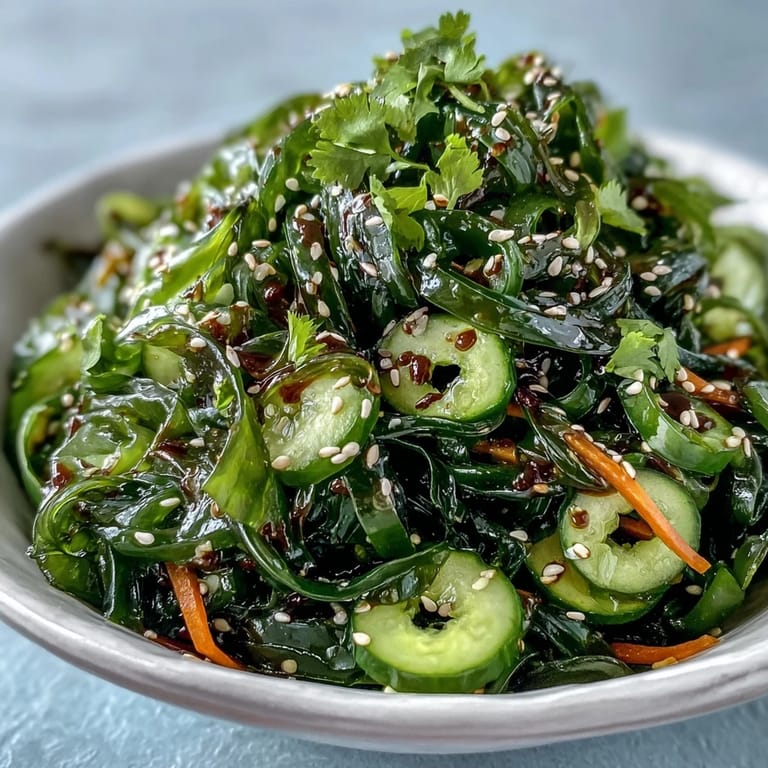
Save This salad has become my answer to "What should I bring?" because it travels well and tastes just as good room temperature as cold. There's something honest about sharing food that's good for your body and your soul at the same time.
Recipe FAQs
- → What type of seaweed works best?
Dried wakame seaweed is ideal because it rehydrates quickly and has a tender, delicate texture. Soak for 7–10 minutes in cold water until fully softened, then drain well before combining with vegetables.
- → Can I make this ahead?
Yes, prepare the dressing and vegetables up to a day in advance. Toss everything together 15–30 minutes before serving—chilling helps the seaweed absorb the tangy flavors even better.
- → Is this suitable for special diets?
Naturally vegan and easily gluten-free when using tamari instead of soy sauce. The sesame-ginger dressing adds rich umami flavor without any animal products or common allergens beyond soy and sesame.
- → What can I add for extra crunch?
Thinly sliced radish, shredded red cabbage, or even edamame beans add wonderful texture and color. Toasted sesame seeds on top provide a nutty crunch that complements the tender seaweed perfectly.
- → How long will leftovers keep?
Store in an airtight container in the refrigerator for up to 2 days. The vegetables will soften slightly as they marinate, but the flavors will continue to develop beautifully. Avoid freezing as the texture becomes compromised.
- → What pairs well with this salad?
Serve alongside grilled fish, tempura vegetables, or as part of a Japanese-inspired spread. Chilled sake, green tea, or crisp white wine complement the tangy, refreshing flavors wonderfully.