 Save
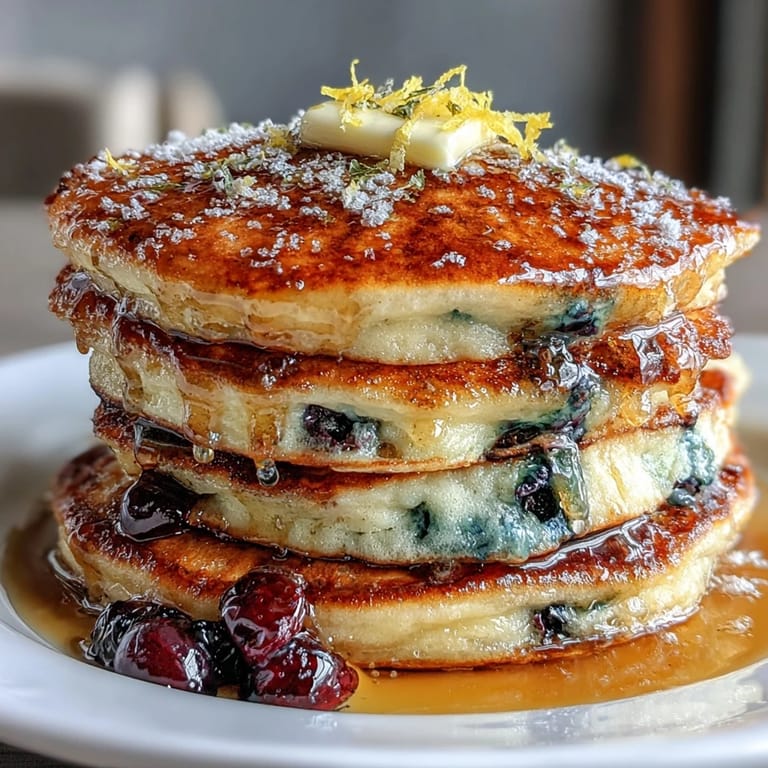
Save My neighbor brought over a container of sourdough starter one afternoon, insisting I find a use for it before it consumed her entire refrigerator. That evening, I stood in my kitchen wondering what breakfast could possibly benefit from tangy fermented dough, and then it hit me—why not pancakes? The first batch was slightly dense, the lemon felt timid, but by the third attempt, something magical happened: fluffy clouds that tasted faintly of bread, bright with citrus, studded with bursts of berry sweetness.
I made these for my in-laws last spring when they visited during peak blueberry season at the farmers market, and my mother-in-law actually asked for the recipe before she'd finished eating. That never happens. She photographed her plate, sent it to her book club group chat, and I became briefly famous in a circle of women I'd never met—all because of lemon zest and sourdough discard.
Ingredients
- Sourdough starter: Use your discard or unfed portion here—this is where that bubbling jar earns its keep, adding complexity and natural fermentation that makes these pancakes taste intentional.
- Milk: Any temperature works, though I've found room temperature mixes more smoothly without any temperature shocks to the eggs.
- Eggs: Large ones matter because you need enough protein to trap air and create lift alongside the baking soda and powder.
- Melted butter: Cool it slightly before mixing or risk scrambling your eggs, a lesson learned the messy way.
- Vanilla extract: Pure vanilla makes a difference here since there's so much citrus competing for attention.
- Lemon zest: The bright, fragrant oils in the peel are what make these distinctive, so microplane it fresh rather than using bottled.
- Lemon juice: Freshly squeezed adds brightness that bottled juice cannot replicate, and the flavor truly matters when it's front and center.
- All-purpose flour: Measure by weight if you have a scale, or fluff, spoon, and level to avoid compacting.
- Granulated sugar: Just enough sweetness to complement the fruit without overshadowing the sourdough tang.
- Baking soda: This reacts with the acidity in the lemon and sourdough to create lift, so do not skip it.
- Baking powder: The backup leavening agent that ensures these rise properly even with a heavier batter.
- Fine sea salt: Enhances all the flavors you've worked to build, making the lemon and blueberry sing louder.
- Fresh or frozen blueberries: Fresh ones are delightful, but frozen work beautifully if you keep them icy and never thaw them first.
Tired of Takeout? 🥡
Get 10 meals you can make faster than delivery arrives. Seriously.
One email. No spam. Unsubscribe anytime.
Instructions
- Combine your wet team:
- In a large bowl, whisk the sourdough starter with milk, eggs, melted butter, vanilla, lemon zest, and lemon juice until smooth and well combined. You're building flavor here, so take a moment to appreciate how the mixture transforms from cloudy to silky.
- Mix dry ingredients separately:
- In another bowl, whisk together flour, sugar, baking soda, baking powder, and salt. This keeps everything aerated and prevents lumps from forming.
- Gently marry wet and dry:
- Pour the wet mixture into the dry bowl and fold with a spatula until just barely combined—overmixing develops gluten and toughens your pancakes. A few small flour streaks are perfectly fine and actually preferable.
- Fold in the blueberries:
- Gently incorporate blueberries with as little stirring as possible, being careful not to crush them. If using frozen berries, add them straight from the freezer.
- Heat your cooking surface:
- Set a non-stick skillet or griddle to medium heat and let it preheat for about two minutes. A light butter or oil coating prevents sticking and adds richness to the edges.
- Cook the first side:
- Pour about 1/4 cup of batter per pancake and watch for small bubbles to form across the surface, usually within 2 to 3 minutes. When the edges look slightly set and opaque, that's your signal it's ready to flip.
- Flip and finish:
- Flip gently and cook another 1 to 2 minutes until the second side is golden brown and the center feels set when you press it lightly. Resist the urge to flip more than once.
- Serve with intention:
- Transfer to a warm plate and top with maple syrup, extra blueberries, and a whisper of lemon zest. Enjoy immediately while they still have that perfect tender quality.
 Save
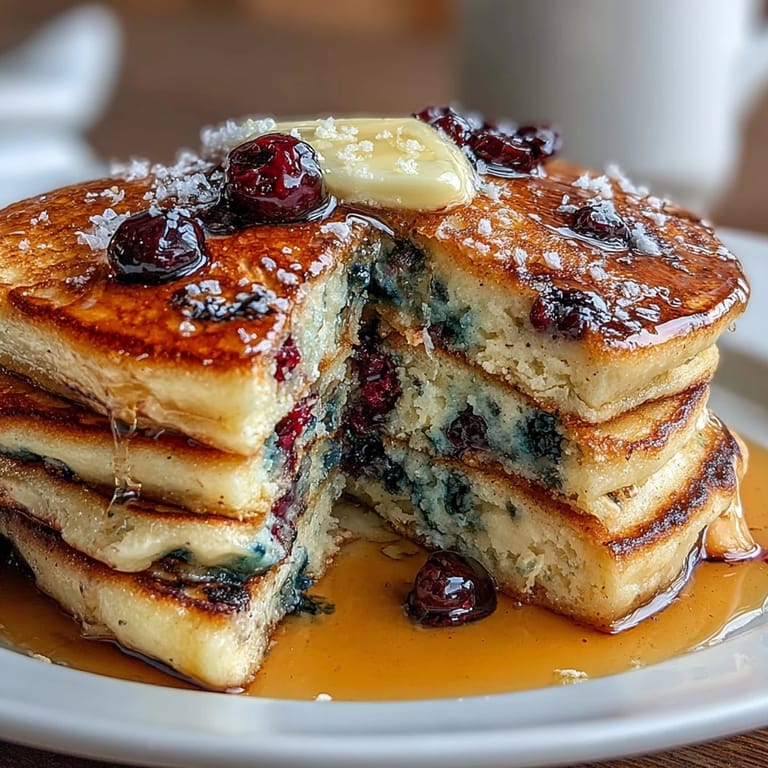
Save There's something almost sacred about pancakes that taste like they were made with intention rather than habit. My daughter once asked why these tasted "fancy" compared to my usual weekday version, and that question made me realize that small choices—using fresh lemon juice instead of extract, respecting the sourdough's complexity—actually matter to people you cook for.
Why Sourdough Changes Everything
Regular pancakes are fine, but sourdough starter introduces a tangy undertone that somehow makes the blueberries taste more themselves, and the lemon zest becomes part of a conversation rather than a solo act. The fermentation also gives these a different texture—lighter and somehow more resilient, staying fluffy even as they cool slightly. It's the kind of thing that makes people pause between bites and ask what you did differently.
The Frozen Blueberry Strategy
I learned this the hard way after watching my first batch turn into purple pancakes with grainy interiors from thawed berries. Frozen blueberries are actually superior here because they stay intact longer and release their juice gradually as the pancake cooks, creating pockets of flavor rather than uniform purple tint. They also help cool the batter slightly, which can actually improve texture when you're working with the acidity of sourdough and citrus.
Timing and Temperature Matter
The difference between undercooked centers and properly set pancakes comes down to patience and heat consistency—medium heat is truly the sweet spot, not medium-high where things brown too fast before cooking through. I've learned to let the skillet preheat properly and trust the visual cues: bubbles forming and edges looking set is your reliable signal, far more trustworthy than guessing based on minutes. Here are the details that save pancakes:
- Let your cooking surface preheat for a full two minutes so heat is evenly distributed and the first pancake isn't a guinea pig.
- Wait for visible bubbles across the top before flipping, as this indicates the bottom is set enough to withstand the flip without tearing.
- Keep finished pancakes on a warm plate in a low oven rather than stacking them, which traps steam and makes them soggy.
 Save
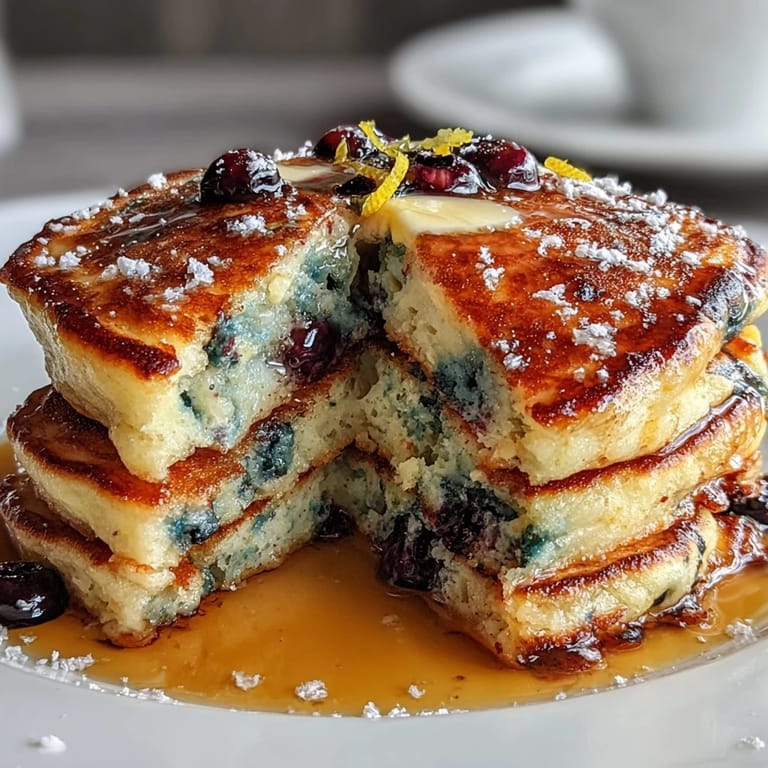
Save These pancakes remind me that breakfast doesn't have to be complicated to feel special, and that using ingredients thoughtfully—especially one you might otherwise discard—creates something worth waking up for. Serve them warm with whatever toppings call to you, but honestly, they need very little to shine.
Recipe FAQs
- → How does the sourdough starter affect flavor?
The sourdough starter adds a subtle tang and depth, enhancing the pancake's complexity and tenderness.
- → Can I use frozen blueberries?
Yes, fold them in frozen to prevent color bleeding; they cook perfectly as the pancakes cook.
- → What alternatives balance the lemon flavor?
Fresh lemon zest and juice provide bright acidity, complementing the sweet blueberries and buttery batter.
- → How to achieve fluffy texture?
Gentle folding of wet and dry ingredients and proper cooking on medium heat ensures fluffy, tender pancakes.
- → Are there variations for dietary needs?
Yes, substitute buttermilk for milk for extra tang or gluten-free flour blends for gluten sensitivity.