 Save
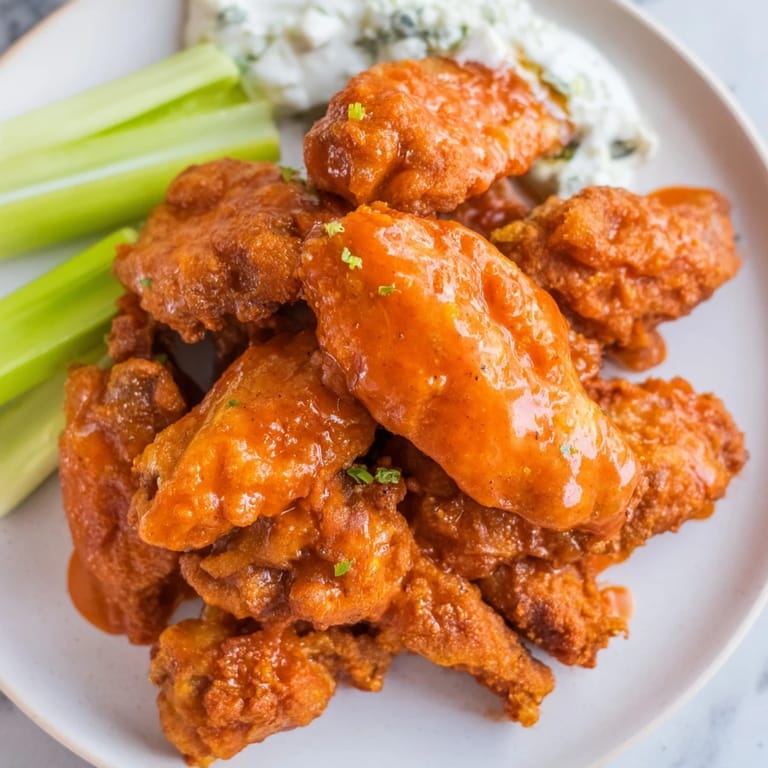
Save Buffalo wings showed up in my life at a Super Bowl party where someone's cousin brought a batch that were still warm, and I ate way too many without thinking about it. There's something about that combination of crispy exterior and tangy, spicy sauce that just works, especially when you're standing around with friends and there's no real plan to sit down. I started making them at home mostly out of stubbornness—I wanted to figure out why restaurant versions felt lighter and crispier than my early attempts. Turns out it's not magic, just technique and not being afraid of the oil temperature.
I made these for a small gathering once and someone asked if I'd ordered them from a wing place, which felt like the highest compliment I could get in that moment. The blue cheese dip came together while the oil was heating, and by the time everyone arrived, the whole kitchen smelled like butter and hot sauce in the best way. That's when I realized these wings aren't just food—they're a conversation starter, something people actually pause to enjoy instead of just grabbing off a plate.
Ingredients
- Chicken wings (1 kg, separated into drumettes and flats): Using separated pieces instead of whole wings helps them cook evenly and get properly crispy. Pat them completely dry before seasoning—moisture is the enemy of crispiness.
- Salt, black pepper, garlic powder: These three are the foundation; don't skip the garlic powder because it adds a depth that plain salt misses.
- All-purpose flour and paprika: The paprika gives a subtle color and flavor to the coating that makes it feel more intentional than plain flour alone.
- Vegetable oil (1 L for frying): You need enough oil to fully submerge the wings, and the temperature matters more than you'd think—too cool and they'll absorb oil and feel greasy, too hot and they'll burn outside before cooking through.
- Unsalted butter, hot sauce, white vinegar, Worcestershire sauce, cayenne pepper: The butter mellows the hot sauce while the vinegar adds brightness; this combination is what makes it taste like actual Buffalo sauce and not just spicy ketchup.
- Celery sticks and blue cheese dip: These aren't just garnish—the cool, creamy contrast is essential to the eating experience.
Tired of Takeout? 🥡
Get 10 meals you can make faster than delivery arrives. Seriously.
One email. No spam. Unsubscribe anytime.
Instructions
- Prepare and season your wings:
- Pat each wing with paper towels until they're genuinely dry, then toss with salt, pepper, and garlic powder. This drying step is what separates crispy wings from soggy ones, so take the extra minute.
- Coat in flour mixture:
- Mix your flour with paprika in a bowl and dredge the wings, shaking off any excess coating so they're evenly covered but not clumpy. A light coating crisps better than a thick one.
- Heat your oil to the right temperature:
- Get the oil to 175°C (350°F) and let it stabilize—use a thermometer if you have one, because guessing is how you end up with unevenly cooked wings. If you don't have a thermometer, drop a small piece of bread in; it should sizzle immediately but not turn black instantly.
- Fry in batches:
- Don't overcrowd the pot or the temperature will drop and the wings will steam instead of fry. Work in batches of about a quarter of your wings at a time for 8-10 minutes until they're deep golden and crispy sounding when you tap them.
- Drain and rest:
- Transfer to a paper towel-lined plate immediately so they don't continue cooking in their own heat and get soggy from steam.
- Make your sauce:
- While the wings are finishing, melt butter gently and stir in hot sauce, vinegar, Worcestershire, and cayenne. Taste it before committing—you can always add more cayenne, but you can't remove it.
- Toss and serve:
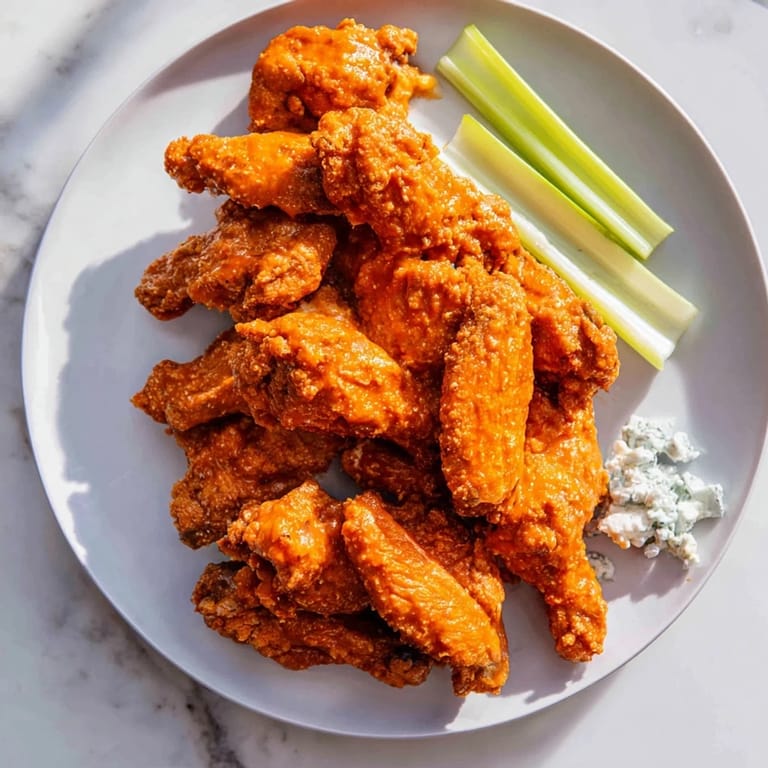
- Put your fried wings in a bowl, pour sauce over, and toss until coated. The heat from the wings will slightly thicken the sauce as they sit together for a moment.
 Save
Save There was this moment where I was tossing a batch and realized the sauce was clinging to every surface perfectly, and I thought, 'Oh, so that's what they're doing at the restaurants.' It wasn't rocket science, just respecting the process and the temperature. That small realization made me feel differently about cooking in general.
The Double-Fry Secret
If you want wings that are genuinely restaurant-quality crispy, embrace the double-fry method even though it sounds excessive. The first fry cooks the inside and creates a base crispiness, then resting lets the outside firm up while the carryover heat finishes the cooking. The second, shorter fry re-crisps the exterior to an almost-shattering texture. It takes about 15 extra minutes total, but the difference is noticeable enough that it's worth doing once to understand what you're aiming for.
Sauce Adjustments That Actually Matter
The beauty of Buffalo sauce is that it's flexible without losing its identity. More cayenne pepper pushes it genuinely spicy, while less makes it approachable for people who want flavor without heat. A splash of extra vinegar brightens it if it feels flat, and the Worcestershire is what adds that savory depth that makes people ask what's in it. You can also swap in ranch dressing instead of blue cheese dip if that's what your crowd prefers, though blue cheese does taste noticeably richer and more intentional.
Timing and Serving Strategy
These wings are best eaten within minutes of finishing, when the sauce is still slightly warm and the crispy exterior hasn't had time to soften. If you're making them for a party, consider frying them in two batches timed so the second batch finishes just as people are settling in to eat. The celery and dip aren't afterthoughts—they cut through the richness and let you eat more wings without feeling overwhelmed.
- Fry the first batch, get them sauced and plated, then start the second batch so everything finishes fresh and warm.
- Keep the sauce warm on the stove but not actively cooking, so you can toss a second batch if you need to make more.
- Serve with plenty of napkins and small plates for dipping, because these are hands-on food and that's part of the fun.
 Save
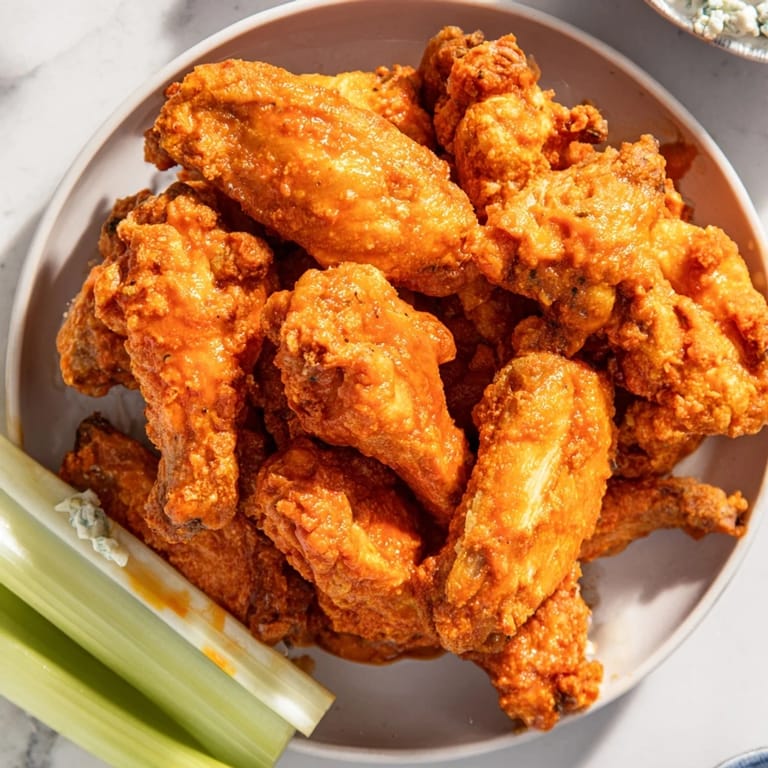
Save Buffalo wings are one of those dishes that reminds me why cooking for people matters—they're meant to be shared, argued over, and enjoyed without pretense. Once you nail the technique, you'll find yourself making them more often than you'd expect.
Recipe FAQs
- → How do I achieve extra-crispy wings?
Double-fry the wings: fry first for 7 minutes, let them rest for 5 minutes, then fry again for 3-4 minutes to enhance crispiness.
- → Can I adjust the spice level?
Yes, modify the cayenne pepper quantity in the sauce to make the wings spicier or milder according to your preference.
- → What is a good substitute for blue cheese dip?
Ranch dressing works well as an alternative, offering a creamy and cooling complement to the spicy wings.
- → How should I prepare the coating for the wings?
Mix all-purpose flour with paprika and dredge the seasoned wings evenly before frying to ensure a flavorful, crispy crust.
- → What oil is best for frying?
Use a neutral vegetable oil with a high smoke point for deep frying to achieve golden, crunchy wings without burning.